

- Products
 SMARTSEER part of GIATATurn every traveller interaction into measurable revenue uplift.
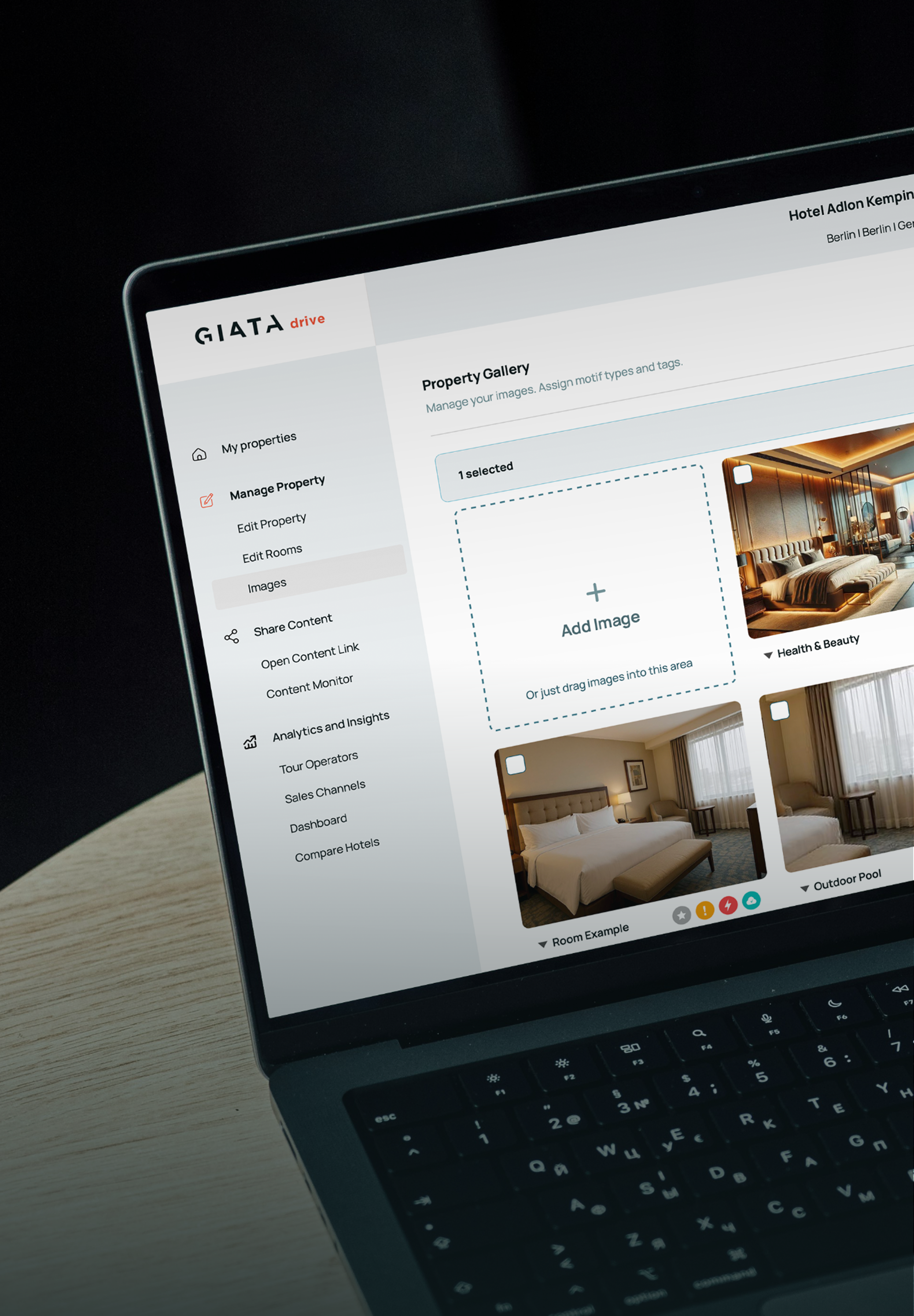 GIATA DriveCentralize, manage and share your hotel data from a single source of truth.
 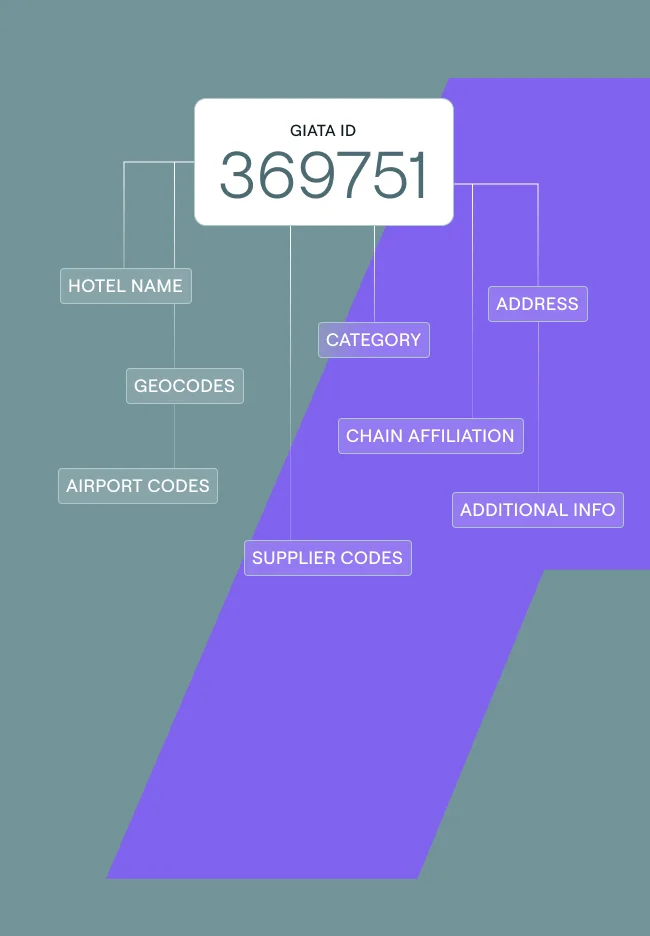 GIATA MulticodesSell with confidence using the world’s largest hotel mapping database.
- GIATA Room MappingClean up inconsistent room names to provide travelers with the best offer for every room type.
- GIATA Multilingual Hotel GuideUnlock new markets by offering localized hotel data in 25 languages.
- GIATA Hotel Guide (DACH)Access over 5 million localized package tours, aggregated from DACH tour operators.
- Solutions
- by Segment
- by Challenge
- Duplication booking errorsDuplicate listings and booking errors cost you time, money and trust
- Reliable travel data translationsYou can’t sell what travelers don’t understand
- Hotel data management and distributionTime spent manually updating hotel data is a lost opportunity to grow
- Individualization in travelPersonalization of travel experiences is no longer optional
- Company
- Latest
- Help Center
- Login
Insights
Behind better travel: 4 success stories powered by better data
30. September 2026Category

Travelers see a hotel, a price and a booking button. Behind that simple experience is an enormous amount of data that has to connect.
One hotel can arrive from multiple suppliers under different names, IDs and information. As inventories grow, so does the complexity. And when the data doesn’t line up, the impact can reach far beyond the database: duplicate listings, booking errors, manual corrections and inconsistent customer experiences.
Now add AI into the equation. As artificial intelligence transforms how people search, compare and book travel, clean, structured data becomes even more important. The experiences travelers see are only as reliable as the information powering them. That’s where GIATA comes in.
But what does that look like in practice?
From managing hotel data for airport transfers to mapping millions of properties and building AI-driven travel experiences, these four customer stories show what becomes possible when better travel starts with better data.
1. Suntransfers: Making the journey to the hotel smoother
A traveler has booked their hotel. Now they need to get there. It sounds straightforward. But for an airport transfer company operating across thousands of destinations, correctly identifying exactly where every passenger needs to go is a significant data challenge.
That was the reality for Suntransfers.
As its business grew, the company needed an efficient way to identify hotels and accommodations across different data sources. Property information could vary between suppliers, creating additional complexity and manual work behind what should be a simple customer experience.
The solution was precise hotel mapping. By working with GIATA, Suntransfers could use consistent property identifiers to improve the way hotel information is matched across its systems.
That creates a more reliable data foundation for its operations and reduces the manual effort associated with inconsistent hotel information. And there’s a bigger lesson here.
Better hotel data matters beyond hotel bookings
Hotel mapping isn’t only important for OTAs and tour operators selling accommodation. A property can be the destination for a transfer, part of a package, an element within an itinerary or one piece of a much larger connected journey.
When that property is identified accurately, the businesses around it can work more efficiently too. For Suntransfers, better hotel data supports the journey beyond the booking.
Discover the full Suntransfers customer story →
2. RateHawk: Bringing precision to hotel mapping at scale
A few duplicate hotel listings are a problem. Multiply that across millions of properties and hundreds of suppliers, and you have a completely different challenge.
RateHawk operates at this kind of scale. Its platform gives travel professionals access to a vast global hotel inventory. But bringing together content from numerous suppliers means the same property can enter the ecosystem with different supplier codes or information.
Without reliable mapping, duplicate or mismatched properties can make their way into search results and booking processes. RateHawk needed a foundation capable of keeping up with that scale.
One property. One identity.
GIATA Multicodes assigns a unique ID to every hotel and maps it to supplier IDs. This means a property can be identified accurately regardless of the supplier behind the offer. For RateHawk, integrating GIATA Multicodes provides a cleaner way to connect property information across its extensive inventory.
The impact reaches operations as well as the customer experience. With property identities matched more consistently, teams can spend less time dealing with fragmented data while supporting the continued onboarding of supplier inventory.
It’s a good example of a simple principle becoming increasingly important as travel businesses grow: Scale needs precision.
More inventory creates more choice. But that choice only creates value when the data behind it stays clear.
Discover how RateHawk uses GIATA hotel mapping at scale →
3. Travelport CETS: Creating consistency across supplier content
Travel advisors need to make comparisons quickly. Their customers expect the same. But comparing travel options becomes considerably harder when property information changes depending on which supplier it came from. Different descriptions, different identifiers, different ways of representing the same hotel.
For Travelport CETS, bringing travel information together in one environment meant solving that inconsistency behind the scenes. GIATA helps consolidate and standardize hotel information across suppliers so that property data can be presented more consistently within the booking workflow. The result is a clearer foundation for comparison.
Less data complexity. More confidence.
Travel technology works best when complexity stays behind the interface. The person making a booking shouldn’t have to understand why two supplier records refer to the same property. And a travel advisor shouldn’t have to untangle fragmented hotel information before helping a customer make a decision.
Precise mapping helps make that possible. GIATA Multicodes cleans up data chaos by assigning one unique ID to every hotel and mapping it to supplier IDs. Duplicate listings can be removed, booking errors reduced and hotel information presented more consistently.
For Travelport CETS, that means better-connected information supporting the people who rely on it to compare and book travel.
Discover the Travelport CETS customer story →
4. Staynex: Building smarter travel experiences on better data
The next generation of travel platforms wants to do more than display inventory. They want to create smarter, more individualized experiences. Staynex is building in that direction, combining technology, hospitality connectivity and AI-driven travel experiences.
But there’s a fundamental requirement behind those ambitions. Before AI can make smarter decisions with hotel information, it needs to understand which hotel is which.
If one property appears under different supplier IDs or inconsistent records, the data becomes fragmented. And fragmented data makes it harder to build reliable automation, analytics and individualization on top.
AI readiness starts before the algorithm
By using GIATA Multicodes, Staynex can create a unified mapping layer across hotel information from different suppliers. That helps reduce duplicate listings and manual reconciliation while creating more consistent property data across the platform.
But the value goes further. Structured hotel data provides a stronger foundation for the technology Staynex is building around it.
As artificial intelligence transforms travel, GIATA provides the clean, structured data that enables personalization at scale. Because the future of AI in travel doesn’t begin with the output. It begins with the data.
Discover the Staynex customer story →
Four businesses. Four challenges. One common foundation.
An airport transfer company. A global accommodation booking platform. A travel distribution technology provider. An emerging AI-driven travel ecosystem.
Their businesses are different. But look underneath, and a common challenge emerges.
More inventory means more data complexity
Travel businesses want to offer choice. That means more suppliers, more properties and more information flowing between systems. But growth can also multiply inconsistencies.
The same hotel can appear under different names and supplier codes. Without accurate mapping, those fragmented records can result in duplicate listings, operational inefficiencies and booking errors.
GIATA Multicodes cleans up that data chaos by giving every hotel a unique identity. GIATA collects hotel property data worldwide and maps records including names, chain affiliation, addresses, cities, destinations and more. The mapping data is then checked and maintained across connected systems. That turns fragmented supplier information into a more reliable foundation for travel technology.
Better data makes invisible infrastructure visible
Most travelers will never think about hotel mapping. They shouldn’t have to. They simply expect the right property to appear, the information to make sense and the booking to work.
That’s the interesting thing about data infrastructure: when it works well, it almost disappears. But its impact doesn’t. It appears in cleaner search results. Fewer duplicate listings. Less manual work. More scalable operations. And stronger foundations for analytics and AI. These are the possibilities in precision.
GIATA turns fragmented data into meaningful connections. What were once cumbersome details become opportunities for precision, personalization and growth, shaping the travel industry’s next great leap forward.
Book a demo and discover what better hotel mapping can make possible for your business.