


- Products
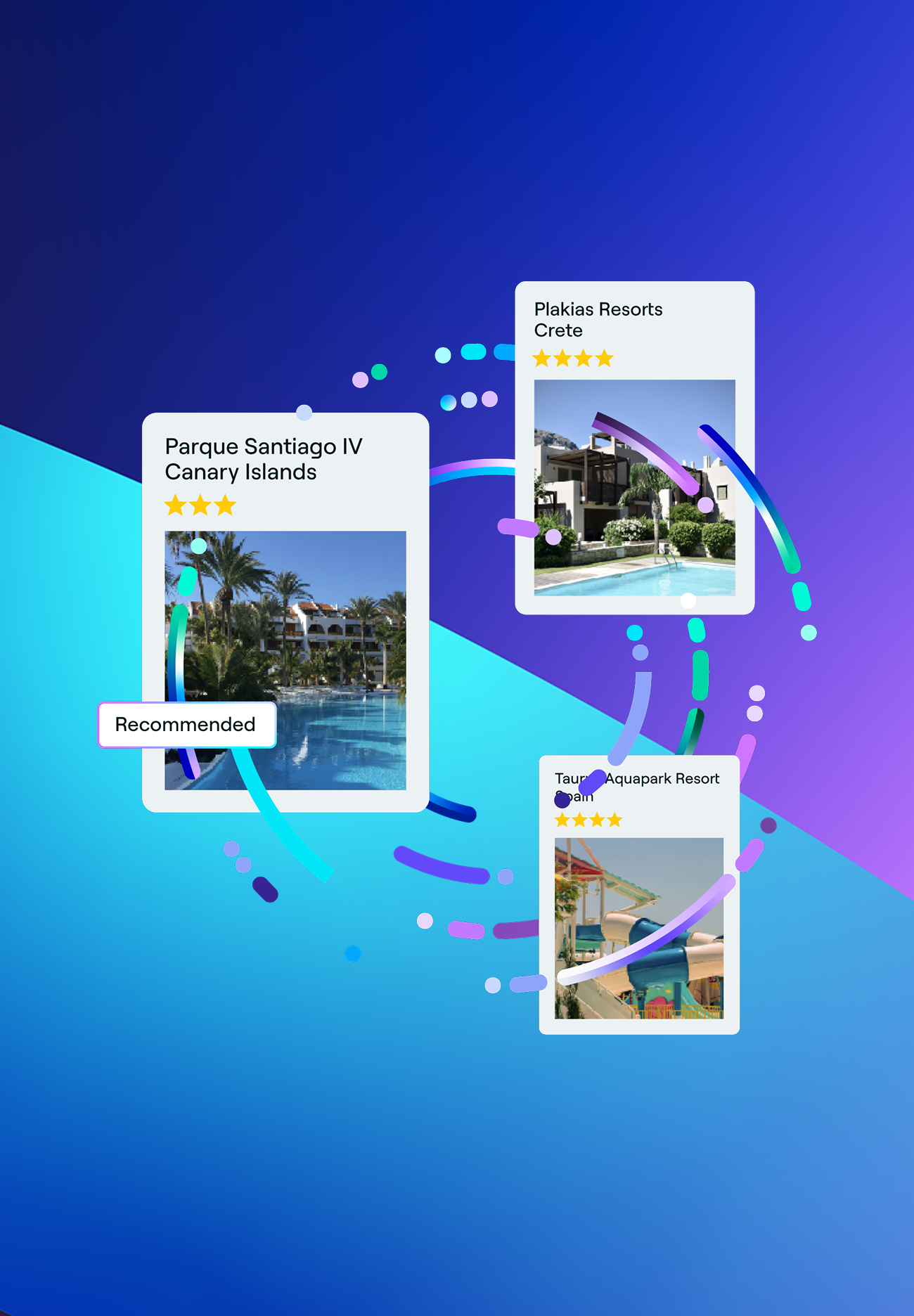 SMARTSEER part of GIATATurn every traveller interaction into measurable revenue uplift.
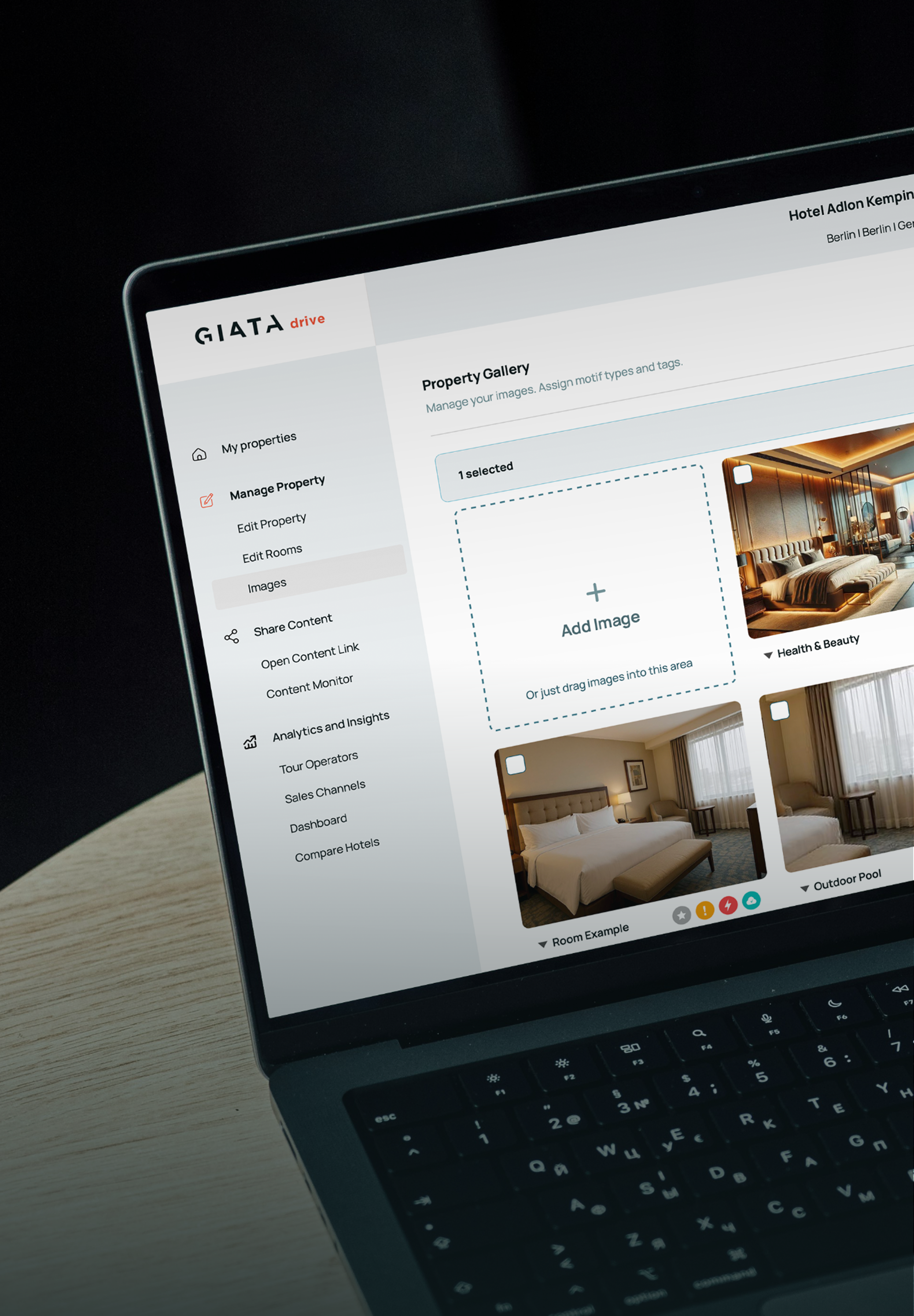 GIATA DriveCentralize, manage and share your hotel data from a single source of truth.
 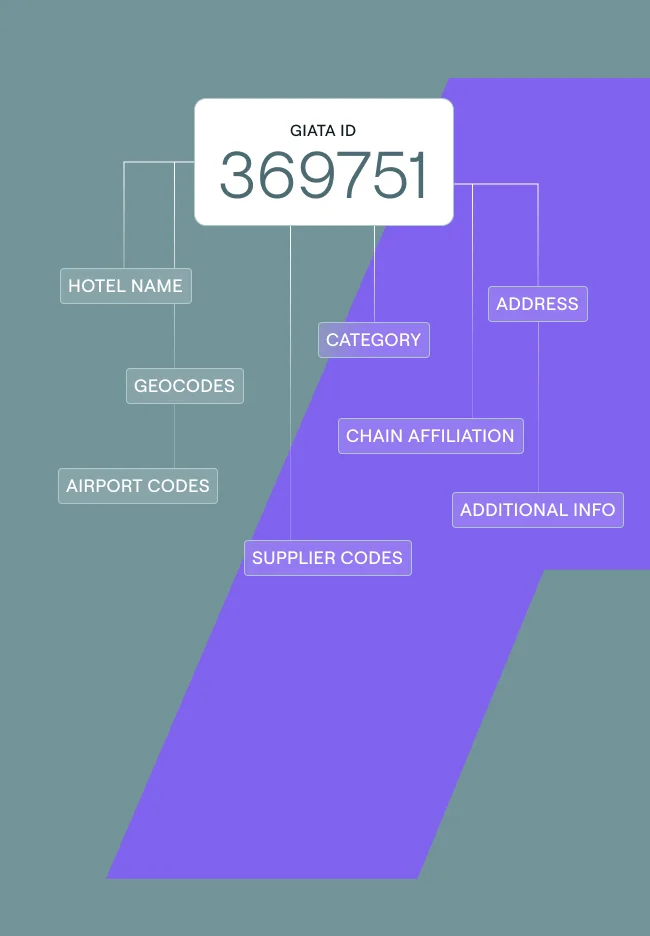 GIATA MulticodesSell with confidence using the world’s largest hotel mapping database.
- GIATA Room MappingClean up inconsistent room names to provide travelers with the best offer for every room type.
- GIATA Multilingual Hotel GuideUnlock new markets by offering localized hotel data in 25 languages.
- GIATA Hotel Guide (DACH)Access over 5 million localized package tours, aggregated from DACH tour operators.
- Solutions
- by Segment
- by Challenge
- Duplication booking errorsDuplicate listings and booking errors cost you time, money and trust
- Reliable travel data translationsYou can’t sell what travelers don’t understand
- Hotel data management and distributionTime spent manually updating hotel data is a lost opportunity to grow
- Decision intelligence in travelTurn user intent into profitable business decisions.
- Company
- Latest
- Help Center
- Login
Insights
How Predictive AI Is Transforming Hotel Personalization and Why Data Quality Decides Who Wins
13. May 2026Category

There’s a comparison travelers make that the hospitality industry rarely talks about openly. They’re not just measuring your booking experience against other travel brands. They’re measuring it against Netflix, which knew what they wanted to watch before they did. Against Spotify, which built a playlist that felt like it read their mind. Against every digital platform that has quietly raised the bar for what “relevant” feels like.
That’s the new standard. And hospitality is catching up faster than most people expected, but not without friction.
The problem isn’t ambition. It’s infrastructure.
Today’s travelers want booking journeys that feel intuitive and personal. Not because they filled out a preference form, but because the platform seems to understand what they’re looking for right now, in this moment.
The challenge is that travel is one of the most fragmented industries on the planet. Hotel content arrives from hundreds of different suppliers. The same room gets called seven different things across seven different channels. Availability shifts constantly. And traveler intent – what someone actually wants – can change within a single session.
Predictive AI is the technology layer starting to make sense of all that complexity. But it’s worth being clear about what that actually means, because the reality is more interesting than the buzzword.
This isn’t about chatbots
When people hear “AI in hospitality,” they often picture automated customer service or templated recommendations. That’s not the shift worth paying attention to.
The real transformation is more subtle: the ability to read live traveler behavior, interpret what someone is trying to accomplish right now, and adapt the experience in real-time, not after they’ve already left.
Old personalization asked: which audience segment does this traveler belong to?
Predictive AI asks: what is this traveler most likely trying to do at this exact moment?
That difference sounds small. The business impact isn’t.
Shorter decision cycles. More relevant offers. Booking journeys that feel responsive rather than generic. McKinsey has noted that AI in travel is moving toward systems that can orchestrate genuinely individualized experiences across the entire booking and service environment , and the early results are showing up in conversion rates.
Context changes everything, and it changes constantly
Here’s something static recommendation systems were never designed to handle: traveler intent is fluid.
Someone browsing luxury resorts at lunch might switch to budget options on their phone an hour later. A delayed flight can completely reshape what someone needs from accommodation. A family searching during school holidays and a solo traveler planning a city break for the weekend are looking at the same inventory but living in entirely different decision contexts.
The platforms that are winning aren’t the ones with the most inventory. They’re the ones that can respond to those shifts in real-time, mid-session, without requiring the traveler to start over.
AI is only as good as the data behind it
There’s a comfortable myth in the industry that better AI models are the solution to most personalization problems. In practice, the bigger issue is almost always the data underneath.
Duplicate hotel listings confuse recommendation engines. Inconsistent room names make pricing comparisons unreliable. Incomplete descriptions across languages mean personalization breaks down the moment you cross a market boundary. If the same hotel appears under three different IDs in your system, the AI doesn’t know it’s the same hotel, and the traveler feels that confusion, even if they can’t name it.
This is the foundational challenge that doesn’t get enough attention in conversations about AI in hospitality.
GIATA has spent nearly three decades working on exactly this layer, the part that makes everything else possible. GIATA’s Mapping solution Multicodes gives every hotel a single, verified identity across suppliers. Room Mapping brings consistency to room naming that’s been fragmented for years. GIATA Drive centralizes how hotels manage and distribute their content. The Multilingual Hotel Guide makes localized content accessible across 25 languages.
None of these are glamorous features. They’re the infrastructure that predictive AI actually runs on, and without them, even the most sophisticated model is working with noise.
Moving past A/B testing
For years, digital optimization in travel meant A/B testing. Run two versions. Wait weeks for statistical significance. Apply the winner. Repeat.
That approach made sense when traveler behavior was predictable enough for static experiments to keep up. It no longer is.
Predictive AI introduces something different: continuous decisioning. Instead of testing one homepage variation against another, the system is constantly evaluating which offer to prioritize, which room type to surface, which signal suggests a traveler is hesitating, and which interaction pattern tends to precede a booking. It adapts in-session rather than after the fact.
And done well, this isn’t just better for conversion rates. It’s better for travelers. Fewer irrelevant results. A shorter path to finding something worth booking. Less of that low-grade frustration that comes from feeling like a platform doesn’t understand you at all.
The distinction matters: the best AI experiences in hospitality should feel helpful. Not like being steered.
From personalization to contextual intelligence
There’s a phrase worth paying attention to right now: contextual intelligence.
Personalization, as most platforms have practiced it, is about knowing who someone is. Contextual intelligence is about understanding what they need right now — and that’s a meaningfully different thing.
Recent moves from Amadeus and Google point to where this is heading. Their work around generative AI and travel discovery explores how technologies like Gemini and Google Maps can shape recommendations that adapt fluidly to a traveler’s live context, not just their search history.
That’s a significant leap from the recommendation engines most platforms run today.
And it raises an uncomfortable operational question for the industry: if AI is expected to respond to that level of real-time complexity, what does the data infrastructure underneath it need to look like?
The answer is more demanding than most teams want to hear. Contextual AI isn’t just a smarter model sitting on top of existing systems. It requires data that is accurate, connected, and continuously maintained, because every gap in the foundation shows up as a failure in the experience. A mismatched property ID. A room name that doesn’t translate cleanly. A description that’s six months out of date on three of your twelve channels.
Those aren’t backend problems. They’re the moments where a traveler’s confidence quietly breaks. Deloitte highlights that real-time personalization depends on the ability to unify fragmented customer signals and activate them instantly across channels.
Systems like GIATA Smartseer are built with this dependency in mind, real-time individualization that only works because the property mapping, room data, and content structures underneath it are clean and consistent. The intelligence layer is visible. The data layer is not. But one without the other doesn’t deliver what travelers are starting to expect.
The future of hospitality AI won’t be decided by which platform has the most sophisticated model. It’ll be decided by which platforms built the data ecosystems those models can actually trust.
The part that doesn’t change
As these systems get more sophisticated, something important stays constant.
Travel is still emotional. People aren’t booking inventory, they’re booking a honeymoon, a family holiday, a long-overdue break, a trip they’ve been thinking about for months. That context means hospitality AI can’t just optimize for clicks. It has to earn trust.
The strongest systems combine real-time precision with transparency and human-centered design. At GIATA, that’s always meant pairing machine learning with human verification, because mapping accuracy at scale requires both. And because in an environment where AI is making more decisions, trustworthy data becomes the most valuable thing in the room.
What comes next
The next generation of booking experiences won’t just present inventory and hope for the best. They’ll continuously interpret intent, adapt to context, and personalize interactions in ways that feel natural rather than mechanical.
But underneath every intelligent recommendation – every offer that lands at exactly the right moment – is something less visible: structured, verified, continuously maintained travel data.
That’s the foundation. And that’s where the work actually starts.