


- Products
 SMARTSEER part of GIATATurn every traveller interaction into measurable revenue uplift.
 GIATA DriveCentralize, manage and share your hotel data from a single source of truth.
 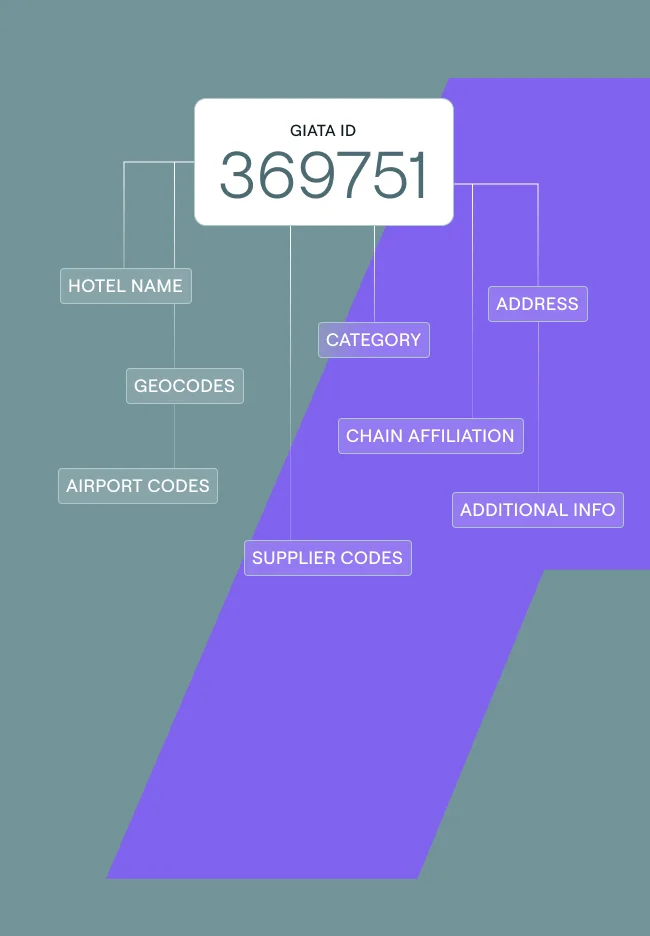 GIATA MulticodesSell with confidence using the world’s largest hotel mapping database.
- GIATA Room MappingClean up inconsistent room names to provide travelers with the best offer for every room type.
- GIATA Multilingual Hotel GuideUnlock new markets by offering localized hotel data in 25 languages.
- GIATA Hotel Guide (DACH)Access over 5 million localized package tours, aggregated from DACH tour operators.
- Solutions
- by Segment
- by Challenge
- Duplication booking errorsDuplicate listings and booking errors cost you time, money and trust
- Reliable travel data translationsYou can’t sell what travelers don’t understand
- Hotel data management and distributionTime spent manually updating hotel data is a lost opportunity to grow
- Decision intelligence in travelTurn user intent into profitable business decisions.
- Company
- Latest
- Help Center
- Login
Insights
What Google’s Push into AI Booking Means for Hotels
27. May 2026Category

Google has been building toward agentic booking in plain sight for years. It finally said it out loud. At Google I/O, the company confirmed that hotels are the next vertical for its Universal Commerce Protocol, the infrastructure designed to enable AI agents to search, decide and complete transactions on behalf of users inside Google’s ecosystem.
Google also previewed the payment layer required for AI-driven transactions, signaling that the company is not simply experimenting with conversational travel search. It is building toward agentic booking flows where AI systems can move from recommendation to transaction with minimal user intervention.
That may sound like another AI product update, but it’s a signal that the travel industry is entering a new phase, where AI systems are no longer simply helping travelers search and compare. They are beginning to act on their behalf.
And that changes the role of travel data completely.
Travel booking is moving from discovery to decisioning
For years, online travel has revolved around search. Travelers entered dates, destinations and filters, then manually sorted through endless pages of hotels, rooms and offers.
AI changes that behavior fundamentally. Instead of browsing, travelers increasingly ask direct questions:
- Which hotel best matches my budget and preferences?
- Where should I stay near the city center with a GYM and family-friendly amenities?
- What is the best option for a three-night business trip next week?
AI systems interpret intent, narrow the options and increasingly deliver a single recommendation instead of a list.
The booking journey becomes shorter, faster and more personalized. But it also becomes far less tolerant of inconsistent data. Because once AI starts making decisions instead of simply displaying options, ambiguity becomes a serious problem.
Travel is one of the hardest environments for AI decisioning
Retail products are comparatively straightforward. A product has a SKU, standardized attributes and a relatively stable identity.
Travel is fundamentally different. The same hotel can appear across hundreds of suppliers under slightly different names, descriptions and IDs. Room categories are inconsistent. Amenities are described differently across channels. Images vary. Translations vary. Availability changes constantly.
For humans, these inconsistencies create friction. For AI systems, they create uncertainty. And agentic AI systems are designed to reduce uncertainty, not work around it.
This is why structured hotel data becomes so critical in an AI-driven booking environment.
AI models need clean, reliable and interoperable data to:
- identify unique properties correctly
- compare room types accurately
- personalize recommendations in real time
- understand traveler intent
- execute reliable booking decisions
Without these foundations, AI booking experiences become unreliable very quickly.
The real competitive advantage is shifting underneath the interface
Much of the AI conversation in travel still focuses on visible experiences: chat interfaces, AI assistants and conversational search. But Google’s announcement reinforces something much bigger happening underneath the surface.
The real competitive advantage is shifting away from front-end discovery alone and toward the quality of the underlying travel data infrastructure.Because in an agentic booking ecosystem, visibility will increasingly depend on whether AI systems trust your data enough to act on it.
That means:
- structured hotel content
- standardized room mapping
- deduplicated hotel identities
- synchronized attributes across channels
- multilingual consistency
- real-time content distribution
These are no longer operational improvements. They are becoming strategic requirements for AI-driven distribution.
AI-readiness starts long before the AI layer
The travel industry is investing heavily in AI-powered experiences, and rightly so. The opportunity for personalization, efficiency and higher conversion is enormous. But AI cannot compensate for fragmented infrastructure underneath it. If hotel data remains inconsistent across suppliers and systems, AI simply amplifies those inconsistencies at scale.
This is why AI-readiness begins long before the interface layer. It begins with structured, verified and continuously maintained data.
Google’s announcement validates where travel technology is heading
Google’s announcement changes the conversation for the travel industry. The question is no longer whether agentic booking is coming. It is how quickly travel companies can prepare their data infrastructure for it.
The future of travel distribution will increasingly be shaped by systems that decide, recommend and transact on behalf of travelers in real time. And in that environment, the winners will not simply be the companies with the most visible AI features.
They will be the companies with the cleanest, most trusted and most interoperable travel data foundations. Because in the next era of travel, AI will not reward the loudest platforms. It will reward the clearest data.