

- Products
 SMARTSEER part of GIATATurn every traveller interaction into measurable revenue uplift.
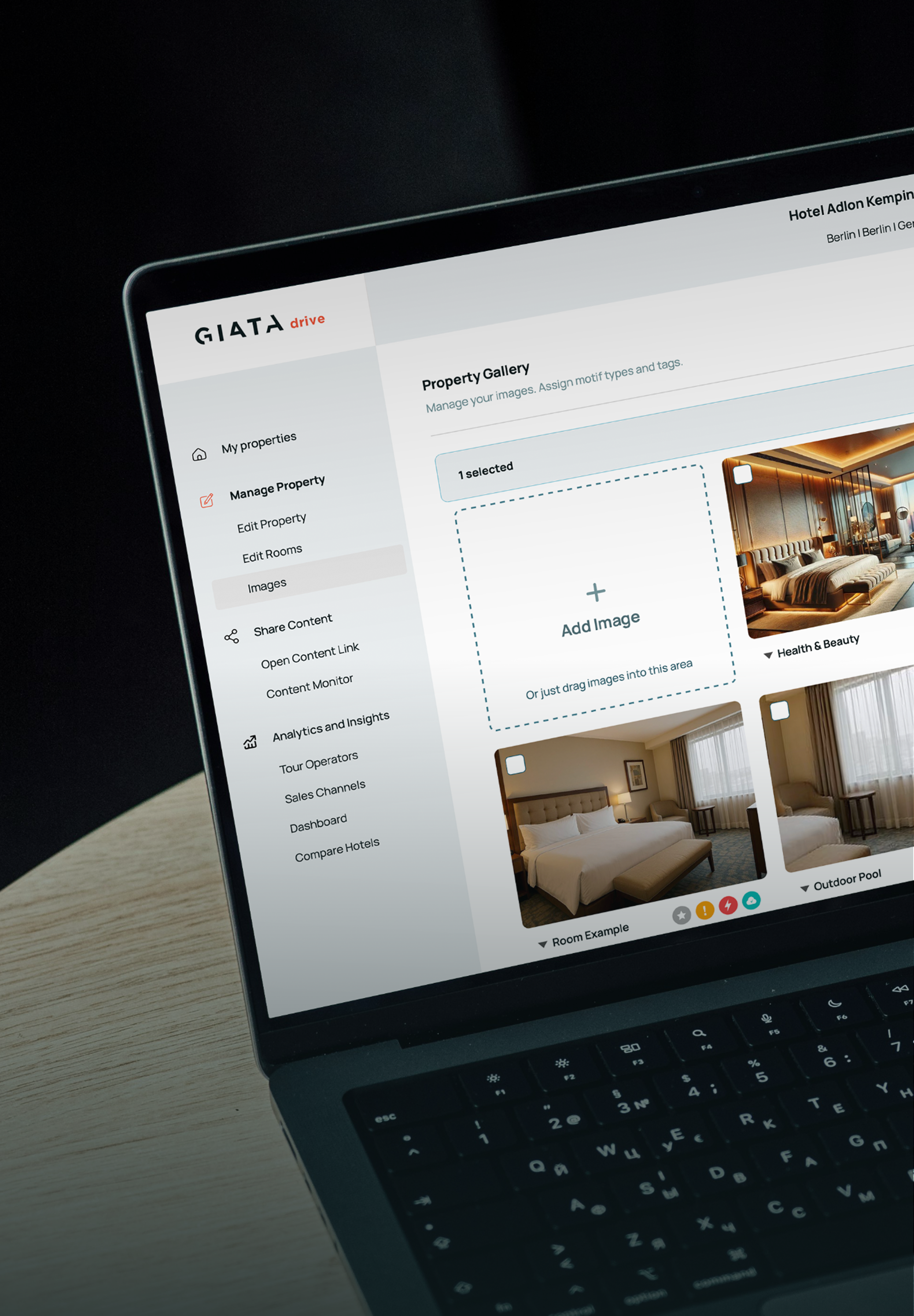 GIATA DriveCentralize, manage and share your hotel data from a single source of truth.
 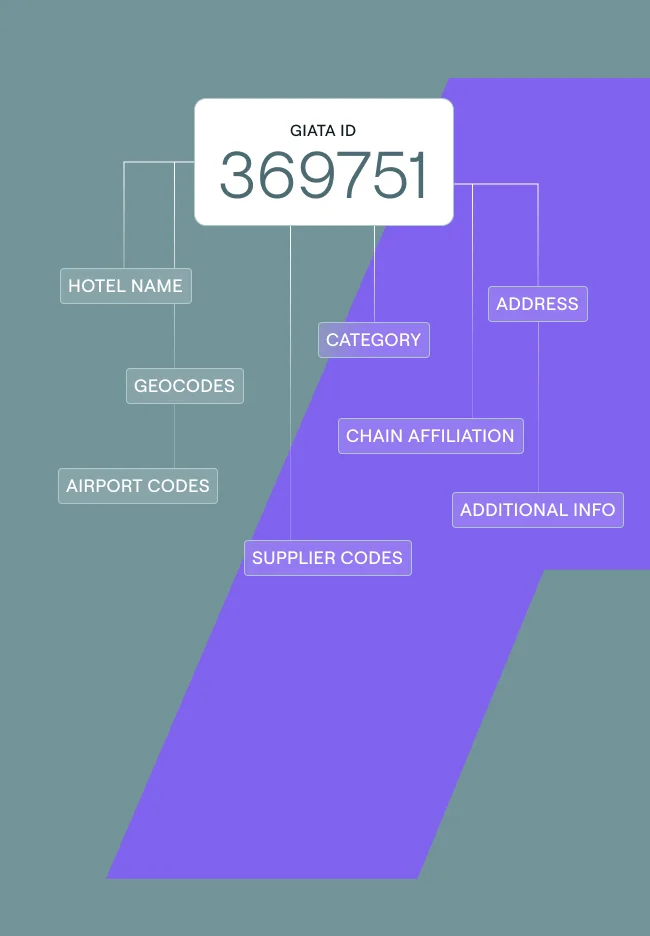 GIATA MulticodesSell with confidence using the world’s largest hotel mapping database.
- GIATA Room MappingClean up inconsistent room names to provide travelers with the best offer for every room type.
- GIATA Multilingual Hotel GuideUnlock new markets by offering localized hotel data in 25 languages.
- GIATA Hotel Guide (DACH)Access over 5 million localized package tours, aggregated from DACH tour operators.
- Solutions
- by Segment
- by Challenge
- Duplication booking errorsDuplicate listings and booking errors cost you time, money and trust
- Reliable travel data translationsYou can’t sell what travelers don’t understand
- Hotel data management and distributionTime spent manually updating hotel data is a lost opportunity to grow
- Decision intelligence in travelTurn user intent into profitable business decisions.
- Company
- Latest
- Help Center
- Login
Insights
From Visibility to Conversion: Why Hotel Distribution Strategy Starts with Data
10. June 2026Category

For years, hotel visibility was largely about being present on the right OTAs. Today, that’s no longer enough.
Travelers discover hotels through search engines, metasearch platforms, review sites, social media, travel apps and increasingly, AI-powered search experiences. The path to booking has become fragmented, but one thing connects every touchpoint: Your hotel content.
The quality, consistency and accuracy of that data now influence not only where your property appears, but whether travelers trust what they see enough to book.
In other words, visibility may get you discovered. Data quality drives conversion.
Your Hotel Isn’t Just Competing on OTAs Anymore
A traveler planning a trip today might begin with Google. Another might ask ChatGPT for recommendations. Someone else may compare options on a metasearch platform before checking reviews and booking through an OTA.
The booking journey is no longer linear.
This creates a new challenge for hoteliers. Information about your property exists across dozens, sometimes hundreds, of digital touchpoints. Every description, image, room type, amenity and policy contributes to how your hotel is perceived.
Beyond OTAs: Where Travelers Are Discovering Hotels Today
Online travel agencies remain important, but they are only one part of a much larger discovery ecosystem. Today’s travelers encounter hotel information through search engines, AI-powered search assistants, Metasearch platforms, and many more.
Each channel relies on data. When information differs between sources, uncertainty increases. And uncertainty is one of the biggest barriers to conversion.
A traveler who finds conflicting room descriptions, outdated images or missing amenities is more likely to continue searching rather than complete a booking.
AI Is Changing Hotel Discovery
Perhaps the biggest shift is the growing role of AI in travel discovery. Instead of browsing ten websites, travelers can now ask a question:
“Which hotels in Berlin are best for families?”
“Which hotels near the beach offer connecting rooms?”
“Which hotels have the best sport facilities?”
AI systems generate answers using available data sources. This creates a new reality for hoteliers: AI doesn’t create information. It interprets and amplifies existing information.
If your hotel data is accurate, structured and consistent, AI can represent your property more effectively. If your hotel data is incomplete or outdated, AI may amplify those issues instead.
Learn how to improve your visibility in AI search
If Your Hotel Data Is Outdated, AI Will Amplify the Problem
Many hotels still manage content manually across multiple channels. A new image gets uploaded to one platform but not another. An amenity changes but isn’t updated everywhere. Room descriptions vary depending on the distribution partner.
These inconsistencies have always created operational challenges. In the age of AI, they become visibility and conversion challenges as well.
AI systems rely on structured information to understand and recommend properties. When data is fragmented, confidence decreases. And when confidence decreases, recommendations become less accurate. The result isn’t just a poor guest experience. It can mean missed bookings before a traveler ever reaches your website.
The Hidden Cost of Managing Hotel Content Channel by Channel
Most hotel teams simply don’t have the time to manually update every distribution channel. As a result, they prioritize a handful of major platforms while other channels receive less attention.
The challenge is that travelers don’t all discover hotels through the same sources. A channel that receives little attention today may be the exact channel influencing tomorrow’s booking decision.
Managing content channel by channel creates:
- Increased manual workload
- Greater risk of inconsistencies
- Slower updates
- Reduced visibility across long-tail distribution channels
What starts as an operational issue quickly becomes a commercial one.
Distribution Consistency Builds Traveler Confidence
The most effective distribution strategies aren’t necessarily the ones with the most channels. They’re the ones with the most consistent information.
When travelers encounter the same property details, room information, images and amenities wherever they search, confidence grows. Confidence reduces friction. Reduced friction supports conversion.
This is why leading hotel brands increasingly focus on creating a single source of truth for their hotel content. Instead of managing information separately across every platform, they centralize, maintain and distribute data consistently.
The objective isn’t simply efficiency. It’s ensuring travelers always see the most accurate version of the property.
From Visibility to Conversion
The hospitality industry often treats visibility and conversion as separate challenges. In reality, they’re closely connected. Visibility gets your hotel into consideration. Consistent, trustworthy and structured data helps travelers choose it.
As AI continues to reshape how people search, compare and book travel, the hotels that perform best won’t simply be the most visible.
They’ll be the properties whose data is accurate, connected and ready to travel wherever travelers discover them.
Because in today’s travel ecosystem, distribution strategy doesn’t start with channels. It starts with data.
Book a demo to learn more about GIATA Drive