

- Products
 SMARTSEER part of GIATATurn every traveller interaction into measurable revenue uplift.
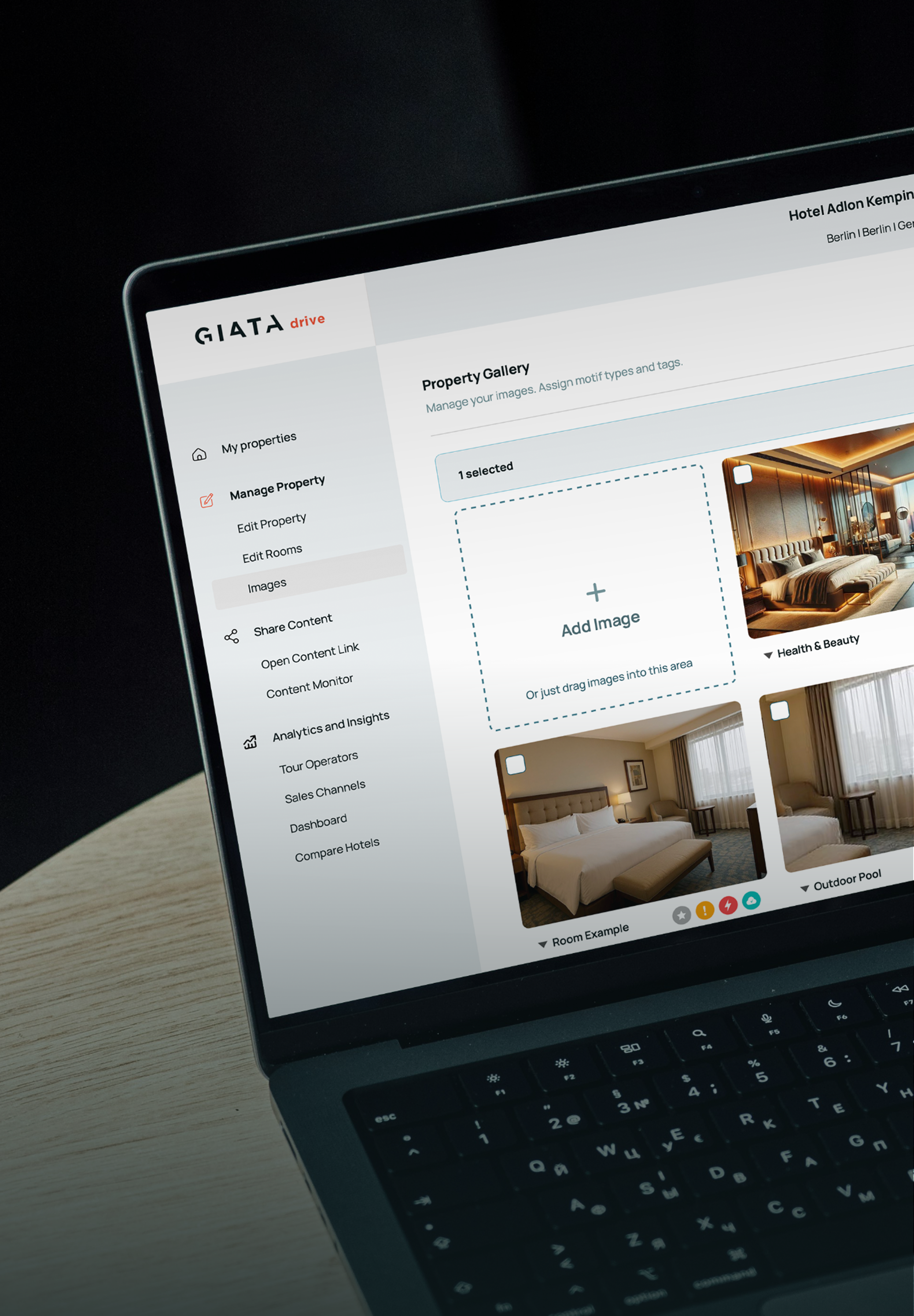 GIATA DriveCentralize, manage and share your hotel data from a single source of truth.
 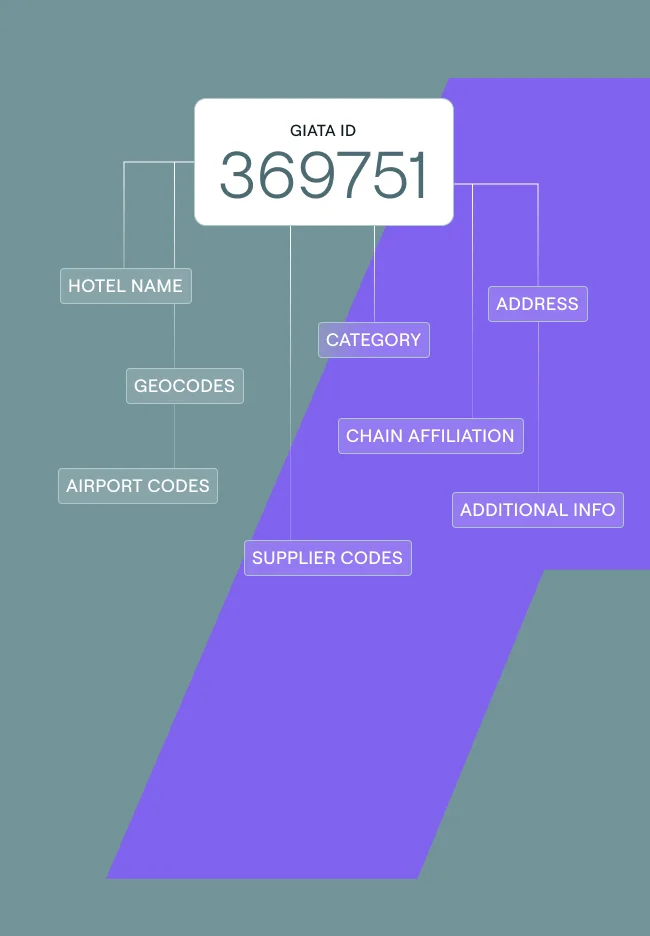 GIATA MulticodesSell with confidence using the world’s largest hotel mapping database.
- GIATA Room MappingClean up inconsistent room names to provide travelers with the best offer for every room type.
- GIATA Multilingual Hotel GuideUnlock new markets by offering localized hotel data in 25 languages.
- GIATA Hotel Guide (DACH)Access over 5 million localized package tours, aggregated from DACH tour operators.
- Solutions
- by Segment
- by Challenge
- Duplication booking errorsDuplicate listings and booking errors cost you time, money and trust
- Reliable travel data translationsYou can’t sell what travelers don’t understand
- Hotel data management and distributionTime spent manually updating hotel data is a lost opportunity to grow
- Decision intelligence in travelTurn user intent into profitable business decisions.
- Company
- Latest
- Help Center
- Login
Success Story
Growing without the content chaos: 4 hotel chain success stories
14. October 2026Category

One hotel is already a lot of information to manage. Now multiply that by 10, 20 or 40 properties.
Every new hotel brings more room types, images, descriptions, facilities and updates. Every new distribution partner creates another place where that information needs to be accurate. And as a hotel chain expands into new markets, keeping everything consistent becomes an operation of its own.
For hotel chains, growth creates opportunity. But behind the scenes, it can also create a growing content challenge.
Because travelers rarely experience a hotel brand for the first time when they walk through the door. They discover it on an OTA, through a tour operator, on a booking platform or increasingly through an AI-powered search experience.
And if the information they find there is outdated, incomplete or inconsistent, the digital version of the hotel can quickly fall behind the real one.
So how do growing hotel chains keep control of their content without multiplying the manual work?
From managing more than 40 hotels across four countries to supporting rapid portfolio expansion, these four hotel groups show what becomes possible when better growth starts with better data.
Vincci Hoteles: Protecting brand consistency across 40+ hotels
For a hotel chain, consistency doesn’t mean making every property look the same.
Vincci Hoteles is a good example. The group operates more than 40 hotels across Spain, Portugal, Tunisia and Greece, with individual properties designed around their destinations. Each has its own identity, imagery, facilities and story. The challenge was making sure those individual identities stayed intact once the content left Vincci’s hands.
A refreshed image, updated facility or new room description had to be manually updated across multiple distribution partners. With dozens of external touchpoints, outdated descriptions and mismatched imagery could easily appear. In some cases, Vincci’s own information was even overridden by third-party content.
At the scale of a hotel chain, those small inconsistencies add up.
Vincci centralized its hotel content in GIATA Drive and moved from updating partners individually to distributing official property information from a single source. Updates can now flow automatically to connected partners, helping the group maintain control over how each property is represented.
The operational impact is significant: tasks that previously took hours can now be completed in minutes, while content errors have been nearly eliminated. But there is a bigger point here than saving time.
For a hotel chain built around distinctive properties, accurate content is part of protecting the brand itself. The experience a traveler discovers online should reflect the experience the hotel has worked so carefully to create.
The takeaway: Scaling a hotel brand shouldn’t mean losing control of how individual properties are represented.
Discover the full Vincci Hoteles success story →
Mangia’s: Making expansion faster, not more complicated
Growth brings a different challenge when a hotel chain is actively opening, renovating and repositioning properties.
Mangia’s operates 16 properties and more than 3,800 rooms across Sicily and Sardinia. With strategic partnerships including Hilton and Marriott, the group continues to evolve its portfolio through renovations and new openings. But as the portfolio grew, so did the work required to keep property content synchronized across distribution channels.
Descriptions varied. Images weren’t always current. Duplicate listings appeared. Teams spent valuable time correcting attributes and repeating updates across different platforms. Mangia’s needed the content infrastructure to keep pace with the physical growth of the business.
By using GIATA Drive to distribute standardized, multilingual property content from one platform, the group changed how quickly updates could reach the market.
When Mangia’s opens a property or repositions a resort today, getting the new information distributed can take days rather than weeks. The reopening of Mangia’s Sardinia Resort in 2025 showed the difference particularly clearly: a process that once required dozens of individual uploads and partner follow-ups could be managed centrally.
60% less time spent on manual updates.
That number matters because scaling a hotel chain isn’t simply about adding properties. The systems behind the portfolio need to scale with it. If every opening creates another layer of repetitive manual work, growth eventually creates its own bottleneck. Centralized hotel content distribution changes that equation.
The takeaway: The faster a hotel chain grows, the more important scalable content infrastructure becomes.
Discover how Mangia’s streamlined content and scaled digital efficiency with GIATA. →
Zeus: When growth starts putting pressure on the system
Sometimes the challenge isn’t maintaining a large established portfolio. It’s keeping operations from falling behind a business that is moving quickly.
Zeus has more than 4,000 rooms across Greece, Cyprus, Romania and Italy. As the hospitality group expanded, every new property introduced more content and every new distribution relationship created another set of updates.
What looked like growth from the outside increasingly meant repetition behind the scenes. Descriptions differed between platforms. Images could lag behind changes at the property. Duplicate listings introduced friction. And teams found themselves repeating the same manual tasks across contracts and partners.
That creates a familiar scaling problem for hotel chains: the portfolio grows, but the processes underneath it don’t. Zeus moved from fragmented updates to a centralized flow of information with GIATA Drive. Instead of repeatedly entering the same hotel information for different partners, teams can manage it once and distribute consistent, accurate content across connected sales channels.
The result is less manual workload, stronger consistency and more time for teams to focus on work that actually contributes to growth. For expanding hotel chains, that operational breathing room matters. Scalability isn’t only about whether you can add another property. It is about whether your existing teams and systems can support the next one without multiplying the workload.
The takeaway: Sustainable hotel chain growth requires the processes behind the portfolio to grow smarter, not simply bigger.
Discover ZEUS customer story →
Zafiro Hotels: Keeping 14 resorts current through constant change
Not every content challenge comes from adding new hotels. Sometimes the properties themselves keep changing.
Zafiro Hotels operates 14 resorts across Mallorca and Menorca. Maintaining accurate descriptions, images and amenities across an expanding partner network meant dealing with different platform formats and repeated manual updates.
And hotel content is never really finished. Seasonal changes happen. Properties are renovated. Facilities evolve. Images change. Information that was correct six months ago may no longer represent what a guest will experience today.
For Zafiro, manually maintaining those changes across distribution partners consumed time and increased the risk of outdated or incomplete information reaching travelers. By centralizing and automating content distribution through GIATA Drive, Zafiro created a more consistent flow of property information to its connected partners. The group reduced the time spent on content management, particularly around seasonal changes and renovations, while also seeing fewer content-related errors and partner inquiries.
The result isn’t just operational efficiency. More accurate information before arrival also helps set better guest expectations. Because the guest experience doesn’t begin at check-in. It begins with what travelers see before they book.
The takeaway: For hotel chains, content management isn’t a one-time project. Keeping information current is an ongoing part of the guest experience.
Discover the Zafiro Hotels customer story →
Four hotel chains. Four challenges. One underlying problem.
Vincci, Mangia’s, Zeus and Zafiro operate different portfolios, in different markets and at different stages of growth. But look behind the individual challenges and the same pattern appears.
As a hotel chain grows, so does the amount of information it has to manage. More properties create more content. More partners create more distribution points. More changes create more opportunities for information to become outdated or inconsistent.
Trying to solve that by adding more manual work doesn’t scale. The alternative is to create one reliable source for hotel content and build distribution around it.
That means a new image doesn’t need to become dozens of separate uploads. A renovated facility doesn’t need to trigger the same correction across multiple platforms. And opening the next hotel doesn’t have to mean rebuilding the same content processes from scratch.
For hotel chains, better hotel data isn’t just about having cleaner listings.
It means less manual work, greater control over the brand, faster updates and an infrastructure that can grow with the business. And that foundation is becoming even more important.
As AI changes how travelers search, compare and discover hotels, travel platforms increasingly depend on structured, consistent and reliable information to understand what a property actually offers. The channels may continue to change, but the principle behind them won’t:
The experience travelers discover can only be as reliable as the data behind it.
Book a demo and discover what better hotel data can make possible for your business.