GIATA invests in “The 101 Besten” – Thomas Maechler appointed CEO
Carsten K. Rath and David Rath, founders of the Institute for Service and Leadership Excellence AG (ISLE AG), are welcoming Berlin-based travel tech company GIATA GmbH as a strategic investor. ISLE AG is the parent company of the renowned hotel ranking “The 101 Besten”.
GIATA is a leading provider of hotel data and content solutions for the global travel and hospitality industry. It is joining ISLE AG as a strategic partner. At the same time, Carsten K. Rath will step back from operational management, handing over CEO responsibilities to Thomas Maechler as of February 1, 2026. Rath will continue to support the company as Chairman.
Berlingen/Berlin, Januar6 16, 2026 – The success story of ISLE AG, the company behind the established hotel ranking “The 101 Besten”, is entering a new phase. GIATA Group is joining as a strategic partner and investor. This marks a significant step in the digital evolution of the brand. While “The 101 Besten” has traditionally focused on publishing and events, its offering will now expand into digital formats. Moreover, the brand will scale internationally. The goal is to grow beyond the DACH region and unlock new target audiences and markets across the global hospitality industry.
“GIATA operates one of the most comprehensive hotel databases worldwide and is deeply rooted both in the DACH region and in key global source markets. This creates an opportunity for greater visibility and international relevance across the hospitality industry,” says Carsten K. Rath. Rath will remain closely involved as the Chairman of “The 101 Besten”, supporting its continued expansion.
Thomas Maechler appointed CEO – full team remains in place
As part of GIATA’s investment, Carsten K. Rath will hand over operational leadership to Thomas Maechler on February 1, 2026. The Swiss national will assume the role of CEO and join the Board of Directors. Mathis Boldt, CEO of GIATA Group, will take over as Chairman of the Board.
“I hired Thomas Maechler in September 2025 and was able to bring him on board. He is the ideal choice for this role,” says Carsten K. Rath.
Maechler brings decades of international experience in luxury hospitality. After graduating from the École hôtelière de Lausanne and gaining experience at The Peninsula Hong Kong, he moved to New York in 1996, where he worked at Four Seasons The Pierre and Swissôtel The Drake. Back in Switzerland, he worked as a consultant for the Swiss Society for Hotel Credit (SGH) before becoming General Manager and later owner of the Beau-Rivage Hôtel Neuchâtel. He has also been a member of Relais & Châteaux and served as Board Member and Vice President of Swiss Deluxe Hotels. Maechler is widely regarded as one of the most well-connected professionals in the industry.
“I am excited by the opportunity to build on the success of Carsten K. Rath, his son David, and their team, while bringing new momentum together with GIATA. We aim to further internationalize ‘The 101 Besten’ create new digital growth opportunities for hoteliers, and deliver additional value,” says Thomas Maechler.
Johanna Seiler, a long-standing operational leader of “The 101 Besten” will continue to lead the team as COO.
“Johanna Seiler’s work is an integral part of the success of ‘The 101 Besten’. It was important to us that the entire team remains in place. This continuity is a strong signal of stability and ensures a professional transition,” adds David Rath.
Combining objective methodology with technological excellence
With GIATA’s strategic investment, a unique combination of objective ranking methodology and technological excellence is being created on a global scale. Awarded hotels benefit from fair, independent visibility, especially in the luxury segment. Here, global reputation is essential.
“A credible ranking builds trust and visibility among potential guests and has a measurable impact on demand and bookings, both directly on hotel websites and through AI-driven and indirect distribution channels. Together, we are laying the foundation for a global benchmark that opens new growth opportunities for hoteliers. At the same time, we are providing transparency for travellers. With ‘The 101 Besten’ we are already developing international rankings and data-driven formats that will set new standards in the travel industry.” says Mathis Boldt, CEO of GIATA Group and adds: “My sincere thanks go to Carsten K. Rath and his son David for their trust and close collaboration since summer 2025. What they have built over the years is truly impressive. I look forward to shaping the future together with Carsten K. Rath, and Johanna Seiler. We aim to establish ‘The 101 Besten’ on a global scale.”
Overview
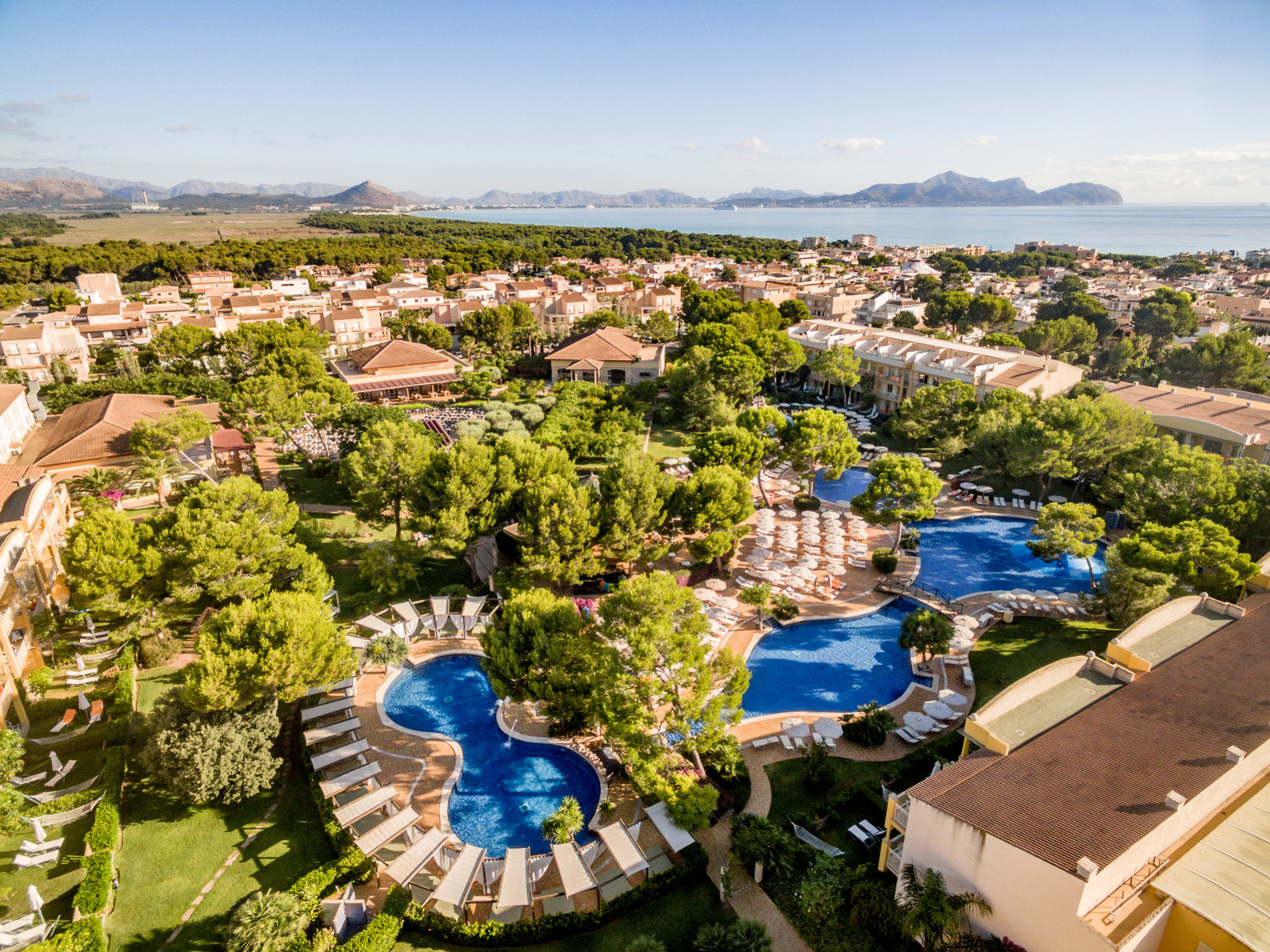
Zafiro Hotels, a premium hotel group with 14 resorts in Mallorca and Menorca, is known for blending Mediterranean charm with upscale hospitality. Their legacy is built on warm hospitality, careful attention to detail, and a constant pursuit of service excellence.
Zafiro Hotels combine high-quality facilities, refined gastronomy, and unique spaces designed to meet the needs of different types of travelers. From family-friendly resorts to adults-only escapes, each property is tailored to offer a distinctive yet consistently high-quality experience. Their goal has always been to deliver both quality and consistency at every touchpoint with guests, partners, and platforms alike.
However, managing hotel content across multiple distribution channels was creating unnecessary friction and putting guest expectations at risk.
The Challenge
Before working with GIATA, Zafiro Hotels was facing a major hurdle: maintaining consistent, accurate content across an expanding partner network. Each distribution platform had its own format, and updates were being done manually. This not only consumed significant time but also opened the door to outdated or incomplete content reaching potential guests.
Manual management of descriptions, images, amenities, and updates required a lot of time and increased the risk of errors. This could affect visibility, conversion, and especially the guest experience before arrival.
The Solution
Zafiro Hotels turned to GIATA for a centralised, automated approach to content distribution. They adopted GIATA Drive, a solution built specifically for hoteliers to:
Automate content delivery to all connected partners
Ensure consistent and updated descriptions, amenities, and images
Eliminate manual updates and reduce duplicate work
GIATA Drive gave the power to control how their brand is presented globally, from a single source of truth.
The Results
The impact was immediate. The Team reduced the time spent on content management, particularly during seasonal changes or renovations. With clearer, more structured information being sent to partners, guest expectations became easier to manage and easier to exceed.
More consistent digital presence across all markets
Fewer content-related errors and partner inquiries
Positive feedback from distribution partners on content quality
Increased operational focus on strategic initiatives over manual tasks
We now spend less time on manual tasks and more on strategic initiatives. GIATA brings both operational efficiency and peace of mind.
Why It Worked
Zafiro Hotels succeeded by turning complexity into clarity. With GIATA, their invisible infrastructure became a visible advantage. Clean, verified, and up-to-date data now flows effortlessly to partners, enhancing booking experiences and trust.
What’s Next
Looking ahead, Zafiro Hotels plans to build on this foundation. They are exploring deeper integrations and richer multimedia distribution to stay at the forefront of digital hospitality. Their goal is simple: elevate every touchpoint, starting from the first click.
Inspired?
Whether you’re managing 5 properties or 50, GIATA helps bring order to the chaos of hotel content. Discover what seamless, scalable content distribution could look like for your brand.
How can Travel adapt in real time.
Travel is changing. Fast. And not just in how people move but how they plan, search, decide, and experience. AI adoption in hospitality is not a future disruptor. It’s already here, forcing us to rethink how we deliver personalization, ensure data accuracy, and elevate the entire guest journey.
But it’s not about having data. It’s about having Relevant data. And AI’s role is turning content chaos into real-time clarity. Accurate. Relevant. Personalized.
So if you’re wondering how to make your hotel content future-ready (and present-perfect), you’re in the right place. The new competitive edge will be the invisible infrastructure behind travel tech.
Yesterday’s advantage is today’s expectation. Travelers don’t just browsing, they’re curating their journeys. They want control without complexity.
The Shift
Yet 56% of global travelers think travel feels more complex than it did a decade ago. And that complexity comes with digital fatigue: On average, travelers view 141 pages of travel content in the 45 days before booking. In the U.S., that number spikes to 277 pages. It’s not just content, it’s overload.
Meanwhile, millennials and Gen Z travellers are setting the pace. They’re spending more, moving faster, and expecting Hoteliers to keep up. Their most-haves? Relevant content, not noise. Real-time recommendations, not last month’s offer. That means static listings and outdated descriptions are not visible anymore. AI-driven data isn’t a nice-to-have. It’s the new filter for visibility.
The Invisible Start
Most booking journeys don’t start with a picture, they start with a search engine. And search engines favour certain, structured, and complete hotel content. And the way we search is shifting.
Travelers are discovering the options instead of choosing them.Here is the twist: nearly 3 in 5 travellersdon’t know where they want to go when they start planning. That means relevance isn’t just competitive, it’s decisive. The opportunity to be discovered comes from optimized, AI-ready infrustructure. Clean, consistent, and enriched content is silently powerful. If your content isn’t optimized for discovery, it won’t be discovered at all. Most booking journeys don’t start with a picture, they start with a search engine. And search engines favour certain, structured, and complete hotel content. And the way we search is shifting. Travelers are discovering the options instead of choosing them.
So we’re going further. Individually matched. Instantly surfaced. Infinitely scalable.
Travelers no longer need to see everything. They need to see what fits them. The same listing should speak differently depending on who’s looking. So one traveler wants quiet, candles, and robes. Another needs fast Wi-Fi, early gym access, and coffee to go.
Relevance isn’t volume in these days it’s resonance. Delivered in the right moment, to the right intent.
The Personal Match
Generic listings won’t convert the next generation of travellers. Personalization is now the highest expectation across hospitality, ranked top shift in customer expectations at 31%, influencing both conversions and loyalty. And it’s not personalization at check-in. It’s at discovery.
That’s where AI steps in and matching real-time guest intent with real-time hotel relevance.
What does this look like?
A traveler who loves butique hotels with a gym.
A family searching for kid friendly amenities.
A solo Gen Z nomad looking for coworking vibes and wellness packages.
If your content doesn’t make that match instantly, you’ve already lost them. Your content should tell them, “This was made for you” And without them needing to ask.
Real-Time or Relegated
Content needs to keep the pace with travellers. Because they’re not waiting. In a space where 25% of travelers visit an OTA on the day of booking and spend over 303 minutes with travel content in the weeks leading up, your content can’t lag behind. The traveller journey moves from inspiration to booking in an average of 71 days, but decision-making accelerates sharply near the end. If your content can’t update in real time, it falls out of alignment with experience expectations, availability, pricing, amenities.
AI-ready content distribution solves this not with more data, but with data that’s ready to act. Structured and standardized content flows seamlessly across all sales channels, from OTAs to Travel Agencies.
From Data to Impact
We’ve spent decades refining the structure of hotel content. GIATA has been the silent engine behind the scenes ensuring accuracy, syncing updates, and eliminating errors at scale. But today, the stakes are higher. So we’ve evolved to help hoteliers do more than manage content. That means:
Real-time content delivery
AI-optimized hotel data
Multilingual consistency in 25 languages
Automatic distribution to over 21,000 partners
Because in a world of infinite scrolls, being seen at the right moment matters more than ever.
Ready to Adapt?
We’ve spent decades refining the structure of hotel content. GIATA has been the silent engine behind the scenes ensuring accuracy, synciAI adoption in hospitality is rising. The world’s best hotel experience doesn’t matter if your data can’t deliver it. AI is not being held back by lack of enthusiasm in Travel industry but by limited knowledge and capability. The most cited barrier in a latest study show that it is because of poor knowledge of available AI solutions (39%). But that gap is where leadership begins. AI won’t replace hoteliers but it will empower the ones who adapt it wisely. And AI integration in hospitality isn’t just a software plug-in. It’s a foundational layer of digital strategy that must align with long-term business goals.
The real question is: Will your hotel content be ready when your next guest starts searching?
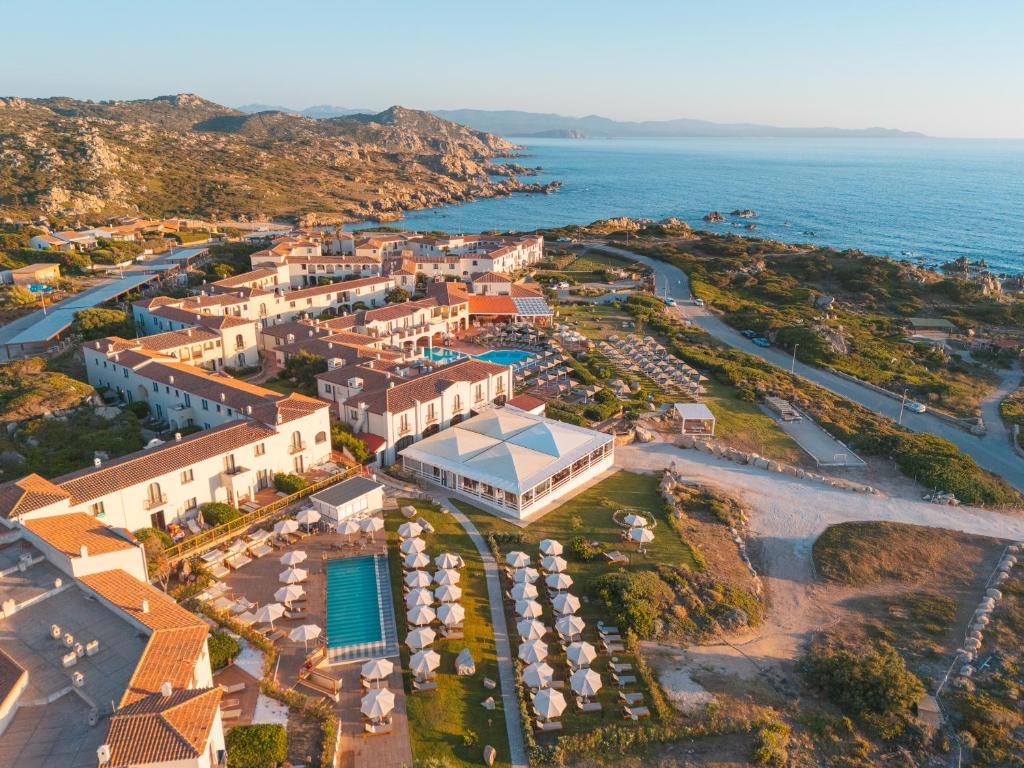
When you’re one of Italy’s largest hotel chain, consistency is a necessity. Mangia’s has built a strong legacy as a hospitality brand with a portfolio of 16 exclusive properties and over 3,800 rooms across Sicily and Sardinia. Strategic partnerships with Hilton and Marriott have strengthened their position in the market, allowing them to continuously evolve through renovations and new openings.
The expanding Group found itself facing an increasingly familiar industry challenge: how to keep property content accurate, up to date, and perfectly synchronized across a growing multiple network of distribution channels.
They needed a fix. Not a patchwork. Something foundational.
The Content Struggle: Beautiful Properties, Disconnected Data
Mangia’s properties are curated with care, from biophilic design to Mediterranean authenticity. But behind the scenes, their content infrastructure told a different story.
The properties shone with Mediterranean elegance, yet the digital story behind them struggled to keep pace. Descriptions varied across channels. Images weren’t always the latest. Duplicate listings surfaced. And manual updates demanded more time than they should. Also leaving space for small errors to slip into the booking journey.
The more Mangia’s grew, the harder it became to manage content manually. The expanding partnerships with Hilton, Marriott, and a newly launched digital tour operator (MDestinations) only increased the pressure in terms of keeping their data accurate.
Following an industry recommendation, Mangia’s turned to GIATA.
Why Giata? They didn’t just need a content management tool. They needed an infrastructure, a system that would quietly but powerfully ensure consistency acroos all sales platforms.
Reliable, efficient, and scalable – GIATA is a key partner in our digital growth journey.
Gaetano Scancarello | Senior Marketing Manager
Implementation That Made the Difference
Onboarding was swift and supported. The GIATA team handled technical integration and training with ease.
Now, when Mangia’s opens a new property or repositions a resort, getting it listed across channels takes days instead of weeks. The 2025 reopening of Mangia’s Sardinia Resort was the perfect example. What once took dozens of uploads and partner follow-ups now happens seamlessly.
The Results: Time Saved, Accuracy Gained
The impact was immediate:
60% less time spent on manual updates
Clean, consistent content across every channel
Fewer manuel errors, faster launches
A more agile marketing and commercial team
Happier distribution partners
GIATA Drive didn’t just save Mangia’s time. It unlocked scale without chaos.
They’re always ready to help. We truly appreciate their responsiveness and expertise.
Gaetano Scancarello | Senior Marketing Manager
The Future Is Structured (and AI-Ready)
Mangia’s isn’t stopping. Their new platform, MDestinations, is already leveraging AI to help travel agents build customizable packages. With GIATA powering content accuracy behind the scenes, Mangia’s can focus on smarter personalization, deeper connections, and continued growth.
GIATA Drive brings structure, efficiency, and consistency to content distribution. Three essential things in today’s multi-channel hospitality environment.
Mangia’s has always curated exceptional hospitality; our goal was to ensure the world could see it clearly. Nothing energizes us more than enabling the true value of their properties to reach more travelers, making it simple for them to choose and enjoy the Mediterranean’s finest.
Cristian Boiangiu | Director Sales, Hospitality Solutions
Two Years Running
Some industry awards mark a milestone. This one confirms a movement. For the second consecutive year, GIATA Drive has been named the #1 Listings Management Solution at the 2026 HotelTechAwards by HotelTechReport — the most trusted benchmark in global hotel technology software. In fact, it’s back-to-back. This was verified by real users. And it’s more relevant than ever.
What the HotelTechAwards actually measure
Often called “the Grammys of hotel tech,” the HotelTechAwards aren’t decided by a panel or a popularity vote. Rankings are based on verified reviews from hotel professionals worldwide. They are also weighted alongside integration performance, customer support quality, and overall market presence. That makes this recognition meaningful in a specific way: it comes directly from the people using hotel technology to run their business every day.
Why hotel content management has never mattered more
The pressure on hotel distribution teams has shifted. Travelers no longer search in straight lines. AI-powered search, metasearch platforms, and OTA algorithms are pulling hotel data from hundreds of sources simultaneously. Inconsistent or outdated content gets filtered out before a traveler ever sees it. For most hotels, the core challenge isn’t visibility. Instead, it’s consistency at scale. Managing hotel listings across 500+ distribution channels — each with its own format, image requirements, and content standards — is time-consuming, error-prone, and difficult to maintain without the right infrastructure. As a result, there is fragmented data, reduced trust, and lost bookings.
How GIATA Drive turns hotel data into a distribution advantage
GIATA Drive was built around a single principle: your hotel content should work harder, not your team. By centralising hotel information in one source of truth, GIATA Drive enables properties and hotel chains to distribute accurate, up-to-date content across their entire channel mix. This happens automatically, consistently, and at scale.
For hotel revenue and distribution teams, that means:
Fewer manual updates across disconnected systems
Faster time-to-live on new channels and OTA partnerships
Consistent hotel listings across every touchpoint where travelers search
Stronger conversion rates driven by accurate, complete property content
Readiness for AI-driven search — where structured, verified data is the new ranking signal
The infrastructure behind modern hotel distribution
Since 1996, GIATA has been a foundational layer of global travel technology — connecting hotels, OTAs, tour operators, bed banks, and GDS providers through verified hotel data and the GIATA ID, the global standard for hotel mapping and content consistency. As AI reshapes how travellers discover and book hotels, the role of structured hotel data is expanding. GIATA Drive is designed for exactly that shift. It gives hotels the data infrastructure to not just manage their content, but also activate it across every channel where it matters. Because in travel distribution, the hotels that win aren’t just the ones with the best product. They’re the ones whose data shows up — accurately, everywhere, every time.
About Hotel Tech Report HotelTechReport is the global authority in hotel technology, trusted by more than 1.8 million hospitality software buyers annually. The platform helps hotel professionals make smarter technology decisions through verified reviews, expert analysis, and data-driven product comparisons.
Every travel journey has its make-or-break moments. The first mile from the airport. The final dash back before your flight. And the coordination required in between. That’s where Suntransfers steps in. Building the critical connection between airports and hotels, turning those in-between miles into stress-free transitions.
Suntransfers brings together supply from trusted local transport providers and distributes it through both B2C and B2B channels. Providing clear connections, accurate pricing, and a travel experience that feels effortless.
But one issue stood in the way of that seamless experience: hotel mapping.
Like many in the travel ecosystem, Suntransfers was juggling content discrepancies, destination mismatches, and manual work trying to align hotel mapping across partners and suppliers. The impact? Operational slowdowns and missed opportunities.
That’s where GIATA came in.
GIATA Multicodes: Making Complexity Invisible
Behind the scenes, Suntransfers platform unifies availability, pricing, booking flows, and real‑time operations. Ensuring reliable, end-to-end journeys that feel seamless to the traveler. It’s a dynamic system where accuracy must be constant.
“GIATA immediately added value because many of our partners were already using it, reducing friction in mapping. Integration was smooth, and it enabled us to match hundreds of thousands of hotels almost instantly,” Suntransfers shared.
This wasn’t just a technical upgrade, it was a strategic leap. GIATA’s structured, hotel mapping solution allowed Suntransfers to eliminate guesswork and deliver confidence across every channel.
The Power Behind the Scene
With GIATA’s infrastructure, Suntransfers now ensures accurate availability and pricing, no matter where a booking originates. Fewer mismatches. Faster partner onboarding. And a measurable boost in booking accuracy.
The internal impact was immediate. “It has greatly reduced the manual work required to manage hotel data… GIATA has helped eliminate that friction and improved the reliability of what we present to customers and partners,” they said.
Both the supply and sales teams noticed the difference. Integrations are faster. Go-to-market timelines are shorter. And behind the scenes, everything just works.
Where Mapping Meets Momentum
Suntransfers’ success reflects a broader truth in travel tech: the most powerful systems are often the ones that stay invisible. By integrating GIATA’s hotel database, they’ve transformed what was once a manual, error-prone process into a clean, automated engine. The result? Greater scalability, smoother operations, and a behind-the-scenes partner quietly powering the reliability their users feel.
As AI continues to reshape the travel landscape, structured data like GIATA’s becomes more than a foundation. It becomes a forward-looking engine. From demand forecasting to proactive issue resolution, Suntransfers is now equipped to move not just faster, but smarter.
What This Means for the Industry
Suntransfers’ journey is a reminder: accuracy is not a detail, it’s a differentiator.
When the infrastructure is solid, everything flows better. Partners collaborate with less friction. Customers get what they expect. And growth comes without compromise.
At GIATA, we believe the best technology should be quiet, trusted, and always future-ready. Because when data just works, so does everything else.
From Manual Overload to Content Harmony at Scale
For hoteliers, time is a luxury. It’s stretched by complex operations, partner coordination, and endless work behind the scenes. For Vincci Hoteles, the real luxury became something else entirely: content consistency across a global distribution network.
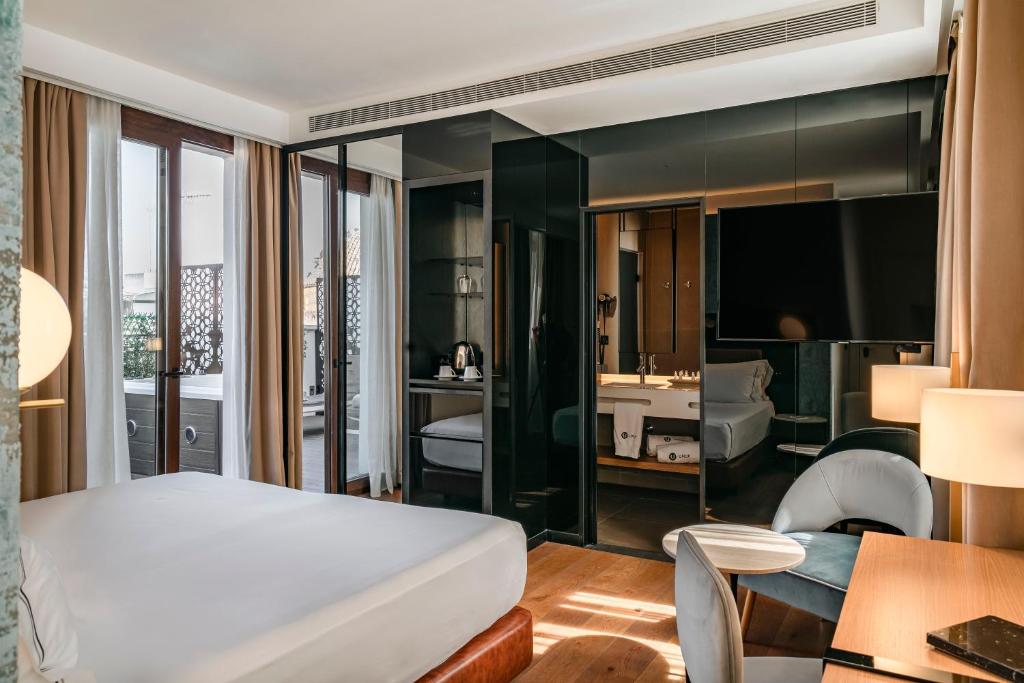
Vincci Hoteles knows how to create unforgettable experiences. With over 40 hotels across Spain, Portugal, Tunisia, and Greece, the group doesn’t just offer stays. It offers sensory-rich journeys that speak to the soul. Each hotel is unique, tailored to its destination through thoughtful design, locally inspired gastronomy, and carefully curated ambiance. This boutique mindset is combined with premium service and a forward-thinking approach to sustainability and technology.
But behind the seamless guest experience, a challenge remained: keeping hotel content aligned across dozens of distribution partners. Each update, whether a refreshed photo, a new facility, or a modified room description — required manual updates to every single distributor. And as every hotelier knows, outdated or mismatched content isn’t just an inconvenience. It’s a risk to the brand.
The Challenge
Too Much Manual, Too Little Harmony.
Vincci Hoteles was facing a common challenge. They had too many touchpoints and not enough central control. Content updates had to be uploaded manually to each distribution partner, and often the brand’s carefully curated information was overridden by third-party content.
The result? Inconsistencies across listings. Outdated descriptions. Mismatched imagery. And a growing administrative burden on the team, time spent correcting rather than creating.
When Vincci Hoteles chose to partner with GIATA, the goal was clear: simplify processes and ensure trusted accuracy. GIATA Drive, a centralized content management solution, became their operational backbone.
After the integration, Vincci gained:
Access to a responsive support team that understood their goals and adapted quickly to their needs.
A single, easy to use interface to upload and manage all hotel content.
Automated distribution to all connected partners, ensuring consistent updates.
We’ve saved a lot of time and reduced the chances of errors. Everything feels much more streamlined now.
Vincci Hoteles | TEAM
The Impact
Time Saved, Trust Gained
Since implementing GIATA Drive, the transformation has been immediate and measurable.
Efficiency has increased significantly. What used to take hours now takes minutes.
Content errors are nearly eliminated. All partners receive accurate, official data.
Brand integrity is preserved. Every listing reflects the curated identity of each Vincci property.
Partners are more satisfied. Distribution channels trust the content they receive, because it’s consistent, up to date, and correct.
And for the Vincci team, it’s more than just operational ease. It’s peace of mind.
The Road Ahead
Future-Ready, Content-Certain
Vincci Hoteles isn’t slowing down. With GIATA in place, they’re now looking ahead to further digital innovation. Embracing tools that help them stay data-clean, brand-strong, and guest-ready. When asked if they would recommend GIATA, their answer was clear, ‘absolutely’.
It’s a simple, effective solution that really helps you take control of your content and saves a huge amount of time.
Vincci Hoteles | TEAM
Why Structured Hotel Content Is Now Critical for Google AI Search
These days travelers search for hotels in a whole new way, therefore any spot that skips structured data might end up completely hidden. Just dropped: Google’s new AI Mode.
It doesn’t just tweak an algorithm, it flips the whole way we view search.
The entire mindset behind searching gets a quick overhaul. AI Mode takes your question, turns it into a back-and-forth chat, pulls organized facts from the whole web, gives you one blended answer rather than a pile of URLs — who wants a boring list of links anyway? Therefore, feeling more like a real conversation.
It’s conversational, personalized, and increasingly agentic. So for hotels the point is clear: no exact machine-readable info, they don’t show up online.
AI Mode as a New Paradigm
Google’s AI Mode has rolled out worldwide – Germany, the United Kingdom, plus more than 180 other nations – therefore old keyword search feels more like a quick chat.
Just ask a question, get a conversation. “The AI Overview gives people the option to get both a quick overview and go deeper on a topic… letting you ask more complex questions and take the next step,” Google says in its official product blog.
For example, travelers can now type or speak: ‘We’re looking for a pet-friendly hotel in Lisbon; fast Wi‑Fi, a balcony, late check-out, two adults next weekend, under €150, can you find one?’
Instead of a static list, the AI snatches info from hotel databases, booking sites and review pages and mixes it into a single answer; therefore you’re left with only what matters. If your hotel data isn’t visible, consistent, and machine-readable… you simply won’t be part of the response.
Industry watchers already sounding alarm; worry is rising fast. As SWR.de reports, this move has already raised eyebrows among content publishers and small businesses alike:
For many providers, it raises the concern: Will users even reach my website anymore?
The Limits of Unstructured Content
Most hotels still treat content management like an afterthought; they dump data into random spreadsheets, use outdated CMS tools, or keep OTA profiles that just don’t line up. So, it ends up messy; therefore, guests end up seeing wrong info.
That’s not just inefficient. It’s invisible in an AI-driven world.
Without it, your property gets skipped. No matter how good your hotel or location might be.
“The AI’s ability to recommend hotels or restaurants depends entirely on the structured information it can retrieve. Bad or incomplete data? You don’t make the list,” explains Tageskarte.de.
Most hotels still treat content management like an afterthought; they dump data into random spreadsheets, use outdated CMS tools, or keep OTA profiles that just don’t line up. So, it ends up messy; therefore, guests end up seeing wrong info.
GIATA Drive: Single Source of Truth
GIATA Drive works like a single spot for all hotel data; therefore hotels can tweak their info once and the platform flings it out automatically to search engines, OTAs and other sites. See how GIATA Drive simplifies hotel content →
Ensure data stays structured, normalized, and AI-ready.
Update once; distribute everywhere.
Translate content across languages.
As a result search visibility increases. Errors drop. Brand consistency returns. When a traveler’s AI assistant scans the web for “boutique hotels near Munich with saunas and family rooms,” you’re not only visible, you’re relevant.
Risks for Non-Adapting Hotels
They risk becoming invisible. Not just on Google, but across the travel ecosystem from metasearch to booking engines, and now conversational AI. This isn’t hype. It’s already happening.
Google is quietly absorbing more user journeys than ever before. It’s the start of a new kind of discovery, where AI owns the first impression.
“This is about making Search more helpful and conversational – where it feels like you’re talking to an expert who knows your preferences,” says Google. And what do experts need? High-quality, structured information.
Accuracy Will Create Visibility
The age of short keywords and scattered listings is ending. To thrive in AI search, hotels must:
Centralize their data
Structure it for machines and humans
Ensure accuracy, availability, and language readiness
Partner with platforms like GIATA that future-proof their visibility
In the AI era, only visible hotels exist. And visibility starts with structured, trusted content.
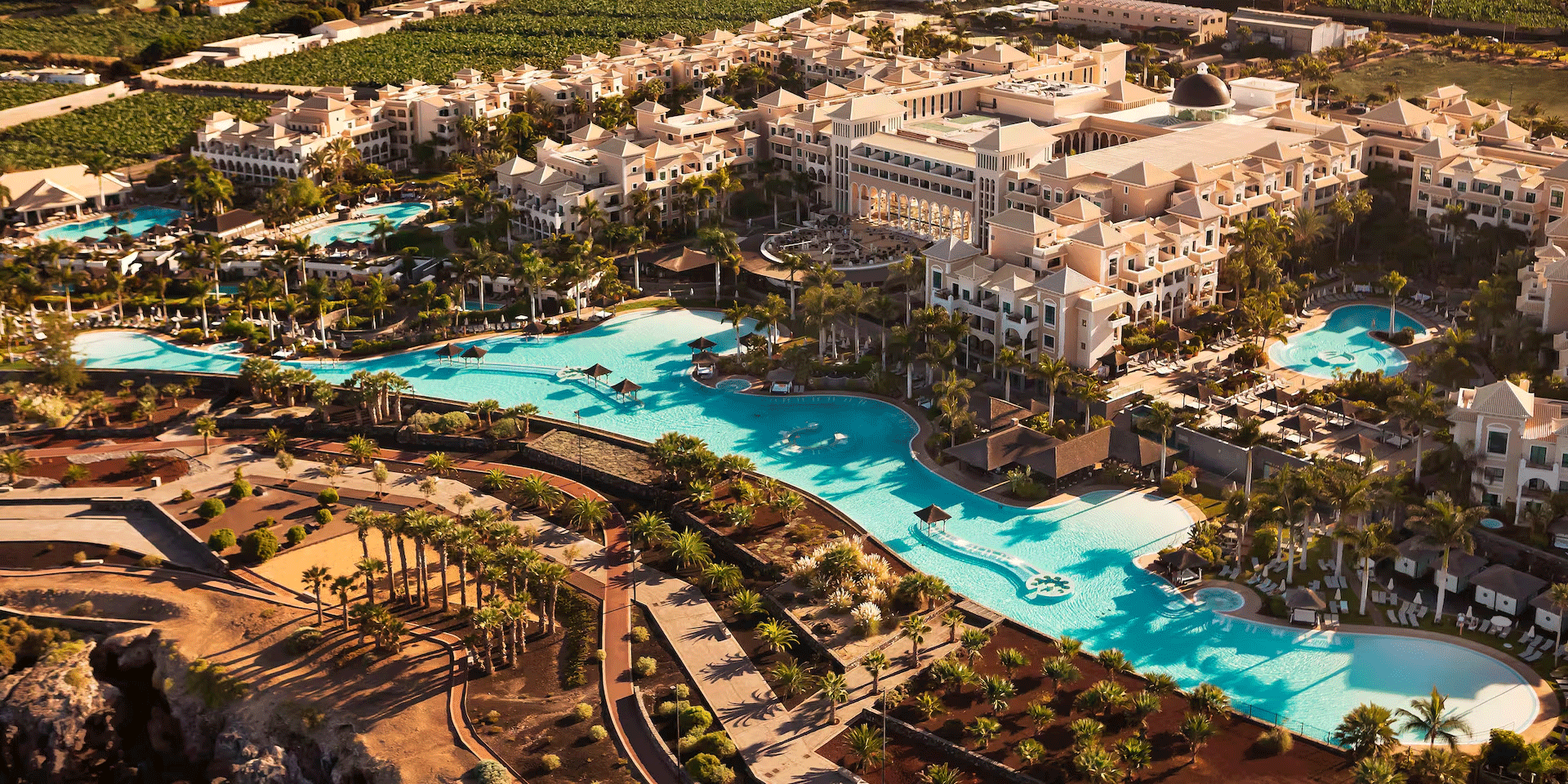
Founded in 1956 in Palma de Mallorca (Spain), Meliá Hotels International has more than 400 hotels open or in the process of opening, in more than 40 countries, and a portfolio of nine brands: Gran Meliá Hotels & Resorts, ME by Meliá, The Meliá Collection, Paradisus by Meliá, Meliá Hotels & Resorts, ZEL, INNSiDE by Meliá, Sol by Meliá, and Affiliated by Meliá. The Company is one of the world’s leading hotel chains in the leisure segment and its experience in this area has allowed it to consolidate itself in the growing market of urban hotels inspired by leisure. Its commitment to responsible tourism has led Meliá Hotels International to be recognised as Europe’s most sustainable hotel company (listed as Sustainability Yearbook member in 2025), as well as being a “Top Employer Large Enterprise 2025”.
The Challenge: Content Distribution Gaps in Key Markets
As Meliá expanded globally, the company faced increasing complexities in distributing consistent and accurate non-bookable content — such as hotel images, facts, and descriptions — across multiple markets and distribution channels. Meliá was looking for a cost-effective solution to maintain this consistency and developed its own content management tool. However, they needed a way to bridge the content distribution gap, ensure consistency across global channels, and avoid building a custom solution from scratch.
The Solution: GIATA Drive for Scalable and Consistent Content Distribution
Meliá explored various solutions and ultimately decided to partner with GIATA, leader in hotel content distribution. GIATA DRIVE API offered a streamlined, scalable solution that addressed Meliá’s needs.
Key reasons Meliá chose GIATA Drive:
Content Consistency: GIATA Drive ensures that Meliá’s hotel content remained accurate, consistent, and up to date across all distribution channels, especially in the German-speaking markets where they previously struggled.
Global Reach: While the immediate goal was to improve content distribution in Germany, Austria, and Switzerland, GIATA Drive’s capabilities allows Meliá to streamline content distribution across all markets.
The Results: Enhanced Efficiency, Cost Savings, and Global Consistency By integrating GIATA Drive, Meliá Hotels International achieved significant improvements in content distribution across their global portfolio:
Improved Efficiency: GIATA Drive enabled Meliá to distribute non-bookable content efficiently across a vast distribution network, reducing the time and resources required to maintain content across platforms.
Content Accuracy and Consistency: Meliá now enjoys consistent, high-quality content across all distribution channels, particularly in the German-speaking markets. This has led to improved brand representation and a more seamless booking experience for potential guests.
Global Reach and Flexibility: GIATA Drive’s scalable API supports Meliá’s ongoing global expansion efforts, ensuring that content remains consistent as the company adds new properties and enters new markets.
Looking Ahead: A Partnership for Continued Success
The partnership with GIATA has proven to be a valuable strategic decision for Meliá Hotels International. By leveraging the GIATA Drive API, Meliá has successfully optimized its content distribution processes, enhanced efficiency, and saved costs, all while ensuring that guests around the world have access to accurate, consistent information about their properties. As Meliá continues to grow, GIATA Drive will remain a key component of their content strategy, supporting their mission to provide unforgettable, soulful experiences.
What truly differentiates providers today from their competitors?
This question is currently on the minds of many in the travel and hospitality tech industry – and too quickly, they answer with a simple buzzword: AI. Artificial intelligence has become the new promise of salvation. Everyone uses it. Everyone advertises it. Everyone wants to be “AI-first.” Yet the more this rhetoric spreads, the more obvious its interchangeability becomes – and how dangerous it is to base a brand on this single attribute. The truth is, AI is no longer a differentiator. It may have been at one point – but it hasn’t been for a long time. Anyone still trying to stand out through AI today falls directly into the trap many people fail to recognize: the AI differentiation trap.
AI is no longer exclusive. It is basic equipment.
Whether GPT, LLaMA, or Stable Diffusion—with open-source models, standardized APIs, and commercial cloud solutions from OpenAI, Google, AWS, and others, virtually everyone today has access to the same technologies. As soon as one provider introduces a new AI feature, others follow within weeks. The innovation threshold falls, the gap closes. Differentiation? None. What used to be special is now table stakes: an expectation, not a unique selling point. If your entire brand message revolves around “we use AI,” you’re standing on shaky ground. Because what impresses today is a commodity tomorrow—and invisible the day after. The greatest misunderstanding is the assumption that customers buy “AI.” They don’t. Customers buy value. They buy solutions, efficiency, time savings, comfort, security, better decisions. AI is merely the means – not the reason. Hence, making AI the center of your communication is fatal, risking drowning in a sea of similar promises. A better approach? Focus on what technology enables and on what truly matters – which, paradoxically, is not the technology itself, but what is often undervalued: data and content.
Content is not a sideshow – it’s where decisions happen.
Especially in hospitality, content is notably undervalued. Images, facts, and amenities are still referred to as “non-bookable content.” This term is outdated and inaccurate. The decision about what is “bookable” depends on understanding how people actually book. People rarely book based solely on price or a search box. They book because a hotel evokes something – a feeling, an idea, a wish.
1. Images sell dreams. A good image doesn’t just show a space—it conveys light, mood, and invitation. It makes the intangible tangible. In hospitality, an image is far more than visual; it is a sales argument, brand message, and emotional gateway simultaneously. 2. Facts provide security. How big is the room? What is the check-in like? Is there fast Wi-Fi, are pets allowed, is the property accessible? The clearer, more precise, and complete this information is, the safer guests feel—meaning fewer hesitations, fewer drop-offs, more bookings. 3. Amenities define experiences. Guests don’t book merely a bed—they book an experience: a spa, rooftop terrace, co-working space, café with a view. These are not “extras”—they are the defining differences. Those believing content is “not bookable” misunderstand the digital booking process. Content determines trust, inspiration, and relevance—or disappears into comparison.
AI is not a substitute for content – it’s an amplifier.
AI can structure, prioritize, translate, categorize, and personalize content. It identifies redundancies, reduces errors, accelerates processes. But it cannot create meaning where none exists.
AI scales existing content – good or bad.
Poor, outdated, inconsistent content is not improved by AI; it’s simply spread more efficiently but remains unconvincing. Conversely, structured, well-maintained, branded content achieves relevance at scale through AI. What matters most is how deeply content, technology, and strategy are intertwined. It starts with image databases that are classified according to OTA-specific requirements – meaning the standards set by Booking.com, Expedia, Amadeus, and others. It continues with texts that aren’t merely translated, but personalized and aligned with the brand voice. And it shows in the ability to not only manage content centrally, but to deliver it in context – tailored by channel, language, audience, and device. Only then does content become an asset. And AI a true multiplier.
Differentiation today arises at the intersection of data, content, technology, and perspective.
The hospitality-tech world has evolved dramatically. AI is standard, but few truly master integrating technology, data, content, and brand management. Differentiation isn’t found in feature lists, but in orchestrating the big picture:
Strong content foundations;
Clear understanding of channels and contexts;
Honest appraisal of technology’s capabilities and limits;
Those combining these elements create visibility and trust – and are booked.
Where is travel heading? How AI will change travel and hotel search.
Up to this point, we’ve talked about the status quo – about what AI is and isn’t today. But the real transformation is just beginning. Because AI isn’t just changing tools and processes – it’s changing the way we search. And with that, it’s also changing what gets found. For a long time, traditional travel search was rigid: travel dates, destination, price filters, results list. But with generative AI, a completely new approach is emerging: search becomes conversational, needs-based – and driven by experiences.
People no longer ask: “What is the price for a hotel in Lisbon in June?” Instead, they ask: “I want to get away for a few days – somewhere sunny, with great food, a stylish design hotel, and yoga classes. What would you recommend?”
This new way of searching doesn’t start with a destination – it starts with a feeling. It’s not tied to a specific travel date, but open to suggestions. It’s not driven by price lists, but by individual desires and life situations. And that changes the focus: the destination fades into the background. What takes center stage are experiences, moods, services — and the hotel as the stage for it all. A business traveler might not be searching for a hotel in “Berlin-Mitte,” but for a hotel with fast check-in, soundproof rooms, 24/7 room service, and a co-working lounge. A family isn’t looking for “Lake Garda in May,” but for a place with childcare, a playground, a pool, and flexible mealtimes. A couple doesn’t want “something nice in France,” but a small property with regional cuisine, a cozy fireplace lounge, and sweeping views. AI can understand, interpret, and translate exactly these kinds of desires into suitable recommendations.
For hotels, this is a new stage – and a new responsibility.
Hotels that start today to make their content understandable not just for people, but also for machines, are laying the foundation to appear in these new types of search experiences. In the future, it won’t be the loudest advertiser who gets found, but the one whose offering best fits the situation – the query, the need, the moment. This means the role of the hotel is changing. Simply being present is no longer enough. It’s about being relevant. Relevant in tone. In timing. In communication. In expectations. To remain visible, hotels need to not only showcase their content – they need to communicate in a way that fits the context. AI needs structured content, clean data, and clear attributes. It needs to understand: What kind of place is this? What makes it special? Who is it exactly right for? The new way of searching won’t be about skimming through lists – it will be a dialog-driven selection process.
And those who can’t take part in that dialogue will be overlooked.
The future belongs to those making their content AI-compatible.
Those who start today not only creating content but also structuring it strategically and making it AI-compatible will be ahead tomorrow. Not because they have the best technology – but because they are relevant. Relevant to real people, with real needs, regardless of whether Agentic AI completes the booking or the customer does it on a website. The traveler remains human.
AI will no longer ask: “Where do you want to go?” But rather: “What do you need right now?” Delivering the right response to meet human needs is what turns queries into confirmed bookings.
How structure truly supports AI – and what YAML has to do with it
To give that one right answer – the answer that truly fits – you need more than just technology. You need content that is not only available, but also understandable. Understandable by people. By machines. And that starts with structure. Because structure is what makes meaning readable. A small format helps make that structure visible: YAML.
Readable, not technical
Show an XML dataset to a non-technical person and you’ll quickly get a puzzled look. XML is a vital technical standard – but it was never meant to be human-readable. Nested tags, technical attributes, cryptic formatting – for many, it’s a closed book. YAML is a useful tool here. It presents the same content in a clear, logically organized format – almost like a well-structured note. Simple, readable, accessible.
A tool for team collaboration
This isn’t about introducing YAML as a new technical format – operational distribution still runs through XML. YAML is primarily helpful internally: it bridges the gap between developers and content professionals – between those who process data technically, and those who use it strategically, editorially, or for communication. If you want to make your content AI-ready, you don’t need a new language – you need a new understanding of structure. YAML can help make that understanding visible – especially for those in the hospitality industry who are responsible for content but don’t work in development themselves: content managers, hotel sales leads, brand teams, platform-side product owners, marketing professionals – all the roles that work with hotel content daily, evaluate it, approve it, or explain it.
Not a new system — but a new mindset YAML isn’t a system, software, or a new tool that needs to be implemented. It’s simply a format for representing structured data that can be used with free converters or basic text editors – especially when the goal is to communicate complex content in a clear and understandable way. In short: 🟡 YAML shows the principle – 🟢 Scalable systems deliver the practice.
Bottom line: Structure is not an option – it’s a prerequisite The future of the TravelTech and Hospitality industries won’t be determined by who uses AI – but by how well AI is brought to life through content, data, and clear structure.
Please give us some basic information about your question or company, so we can provide you with the right answer and solution.
What to expect:
Personalized walkthrough of the application of choice
Live Q&A session with one of our experts
Discussion of scenarios based on your needs
Timeline discussion and next steps
Trusted by 20.000+ businesses
With GIATA, our clients can instantly identify the best rates across room categories - bringing clarity, speed, and sales performance.
Pepe Portas
Global Distribution Director
Consent required to load the form
We respect your privacy. This form is hosted by HubSpot and can only be displayed after you give consent to load external content. This may include cookies.
You are currently viewing a placeholder content from Hubspot Meetings. To access the actual content, click the button below. Please note that doing so will share data with third-party providers.


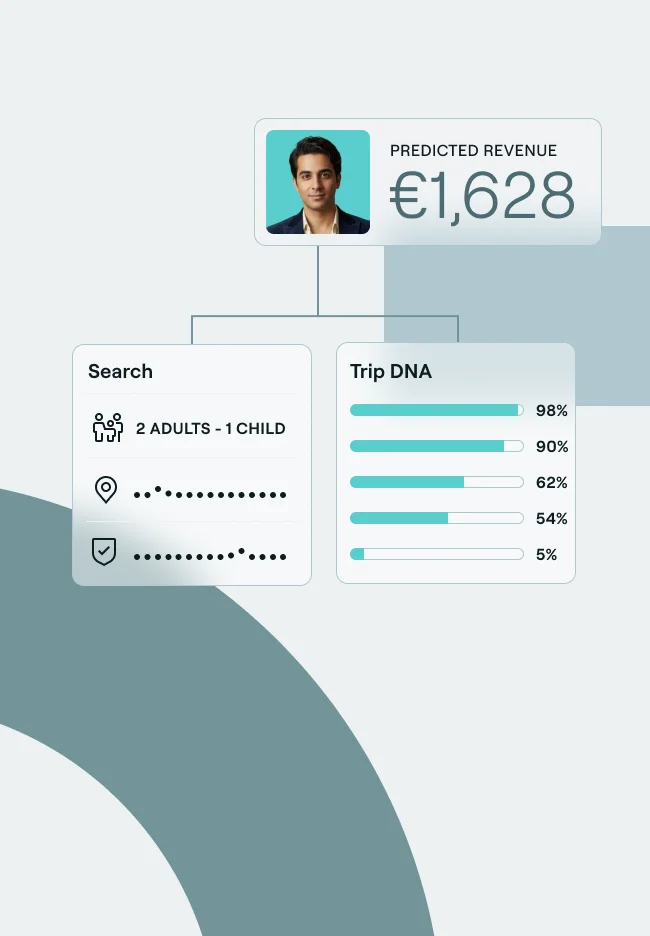 GIATA SmartseerReal-time AI Individualization for sales channels to maximize your conversions.
 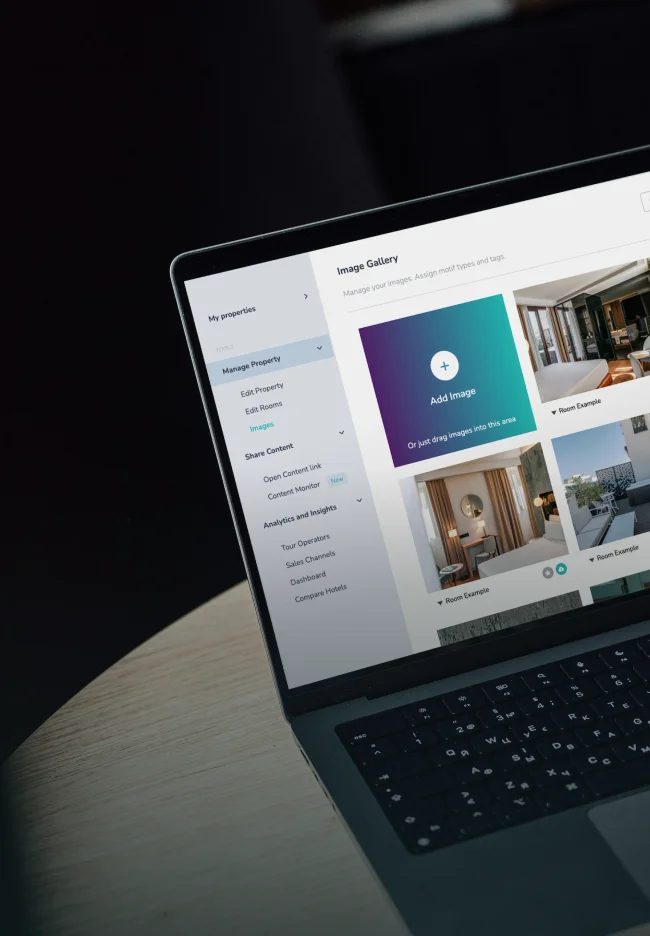 GIATA DriveCentralize, manage and share your hotel data from a single source of truth.
 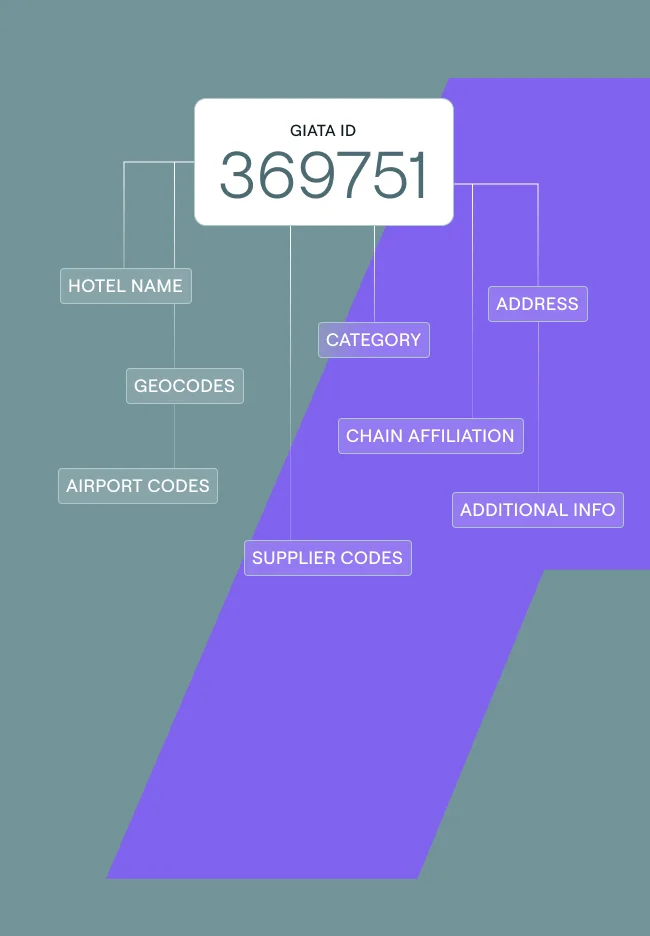 GIATA MulticodesSell with confidence using the world’s largest hotel mapping database.