In travel distribution, precision is everything. But behind many booking platforms, there’s a quiet issue that continues to erode performance: duplicate hotel listings.
At first glance, duplicates may seem like a minor data inconsistency. In reality, they create friction across your entire ecosystem, from search and comparison to booking and post-sale operations. And as distribution grows more complex, the cost of that friction compounds.
Where duplication begins
Online travel platforms aggregate content from hundreds of suppliers, each with their own identifiers, naming conventions, and data structures. As a result the same property can appear multiple times across your system:
Slight variations in hotel names
Inconsistent addresses or location data
Multiple supplier IDs for one property
Without a unified reference point, your platform treats these as separate entities. But your users don’t.
Duplicate listings don’t stay isolated, they cascade across your entire operation.
Fragmented search results Instead of one clear listing, users see multiple versions of the same hotel. This dilutes visibility, complicates comparison, and weakens decision-making.
Pricing inconsistencies Different suppliers may offer different rates for the same property. Without proper mapping, these appear as separate listings rather than comparable offers, making your platform feel unreliable.
Increased booking errors When property data is mismatched, bookings can be assigned incorrectly. This leads to manual intervention, compensation costs, and customer dissatisfaction.
Reduced conversion rates Clarity drives confidence. When users are unsure which listing to trust, they hesitate or leave.
Compromised AI performance AI-driven search and recommendation engines rely on clean, structured data. Duplicate entries distort signals, reduce relevance, and limit personalization capabilities.
Why traditional fixes fall short
Many platforms attempt to solve duplication internally:
Manual mapping efforts
Rule-based matching
Partial supplier alignment
But these approaches don’t scale. As your inventory grows, so does the complexity. New suppliers, new properties, and constant updates make it nearly impossible to maintain accuracy over time. What’s needed is not just correction but a foundational layer of consistency.
From fragmentation to a single source of truth
The solution starts with one principle: one property = one identity. GIATA Multicodes provides exactly that.
As the world’s largest hotel mapping database, it assigns a unique GIATA ID to each property and maps it across supplier systems, creating a consistent reference point across your entire inventory.
This transforms how your platform operates:
Deduplicated listings: One hotel, one presence
Aligned pricing: Comparable offers across suppliers
Clean search results: Clear, trustworthy user experience
Reduced errors: Accurate booking assignments
AI-ready data: Structured inputs for smarter recommendations from LLMs
Behind the scenes, this mapping is continuously maintained, combining machine learning, digital fingerprinting, and human verification to ensure long-term accuracy.
When duplication is eliminated at the data level, the benefits extend across every layer of your business:
Stronger conversion rates through clearer decision paths
Lower operational overhead by reducing manual corrections
Improved partner trust with consistent, reliable listings
Scalable growth without increasing data complexity
Most importantly, it enables you to move from reactive fixes to proactive optimization.
Precision that drives results
At GIATA, we turn fragmented data into meaningful connections. By eliminating duplication at its source, we help OTAs and travel platforms build a reliable foundation, one that supports better decisions, stronger performance, and future-ready innovation. Because in a data-driven travel ecosystem, precision isn’t optional. It’s what turns complexity into opportunity.
Travel is changing. Fast. And not just in how people move but how they plan, search, decide, and experience. AI adoption in hospitality is not a future disruptor. It’s already here, forcing us to rethink how we deliver personalization, ensure data accuracy, and elevate the entire guest journey.
But it’s not about having data. It’s about having Relevant data. And AI’s role is turning content chaos into real-time clarity. Accurate. Relevant. Personalized.
So if you’re wondering how to make your hotel content future-ready (and present-perfect), you’re in the right place. The new competitive edge will be the invisible infrastructure behind travel tech.
Yesterday’s advantage is today’s expectation. Travelers don’t just browsing, they’re curating their journeys. They want control without complexity.
The Shift
Yet 56% of global travelers think travel feels more complex than it did a decade ago. And that complexity comes with digital fatigue: On average, travelers view 141 pages of travel content in the 45 days before booking. In the U.S., that number spikes to 277 pages. It’s not just content, it’s overload.
Meanwhile, millennials and Gen Z travellers are setting the pace. They’re spending more, moving faster, and expecting Hoteliers to keep up. Their most-haves? Relevant content, not noise. Real-time recommendations, not last month’s offer. That means static listings and outdated descriptions are not visible anymore. AI-driven data isn’t a nice-to-have. It’s the new filter for visibility.
The Invisible Start
Most booking journeys don’t start with a picture, they start with a search engine. And search engines favour certain, structured, and complete hotel content. And the way we search is shifting.
Travelers are discovering the options instead of choosing them.Here is the twist: nearly 3 in 5 travellersdon’t know where they want to go when they start planning. That means relevance isn’t just competitive, it’s decisive. The opportunity to be discovered comes from optimized, AI-ready infrustructure. Clean, consistent, and enriched content is silently powerful. If your content isn’t optimized for discovery, it won’t be discovered at all. Most booking journeys don’t start with a picture, they start with a search engine. And search engines favour certain, structured, and complete hotel content. And the way we search is shifting. Travelers are discovering the options instead of choosing them.
So we’re going further. Individually matched. Instantly surfaced. Infinitely scalable.
Travelers no longer need to see everything. They need to see what fits them. The same listing should speak differently depending on who’s looking. So one traveler wants quiet, candles, and robes. Another needs fast Wi-Fi, early gym access, and coffee to go.
Relevance isn’t volume in these days it’s resonance. Delivered in the right moment, to the right intent.
The Personal Match
Generic listings won’t convert the next generation of travellers. Personalization is now the highest expectation across hospitality, ranked top shift in customer expectations at 31%, influencing both conversions and loyalty. And it’s not personalization at check-in. It’s at discovery.
That’s where AI steps in and matching real-time guest intent with real-time hotel relevance.
What does this look like?
A traveler who loves butique hotels with a gym.
A family searching for kid friendly amenities.
A solo Gen Z nomad looking for coworking vibes and wellness packages.
If your content doesn’t make that match instantly, you’ve already lost them. Your content should tell them, “This was made for you” And without them needing to ask.
Real-Time or Relegated
Content needs to keep the pace with travellers. Because they’re not waiting. In a space where 25% of travelers visit an OTA on the day of booking and spend over 303 minutes with travel content in the weeks leading up, your content can’t lag behind. The traveller journey moves from inspiration to booking in an average of 71 days, but decision-making accelerates sharply near the end. If your content can’t update in real time, it falls out of alignment with experience expectations, availability, pricing, amenities.
AI-ready content distribution solves this not with more data, but with data that’s ready to act. Structured and standardized content flows seamlessly across all sales channels, from OTAs to Travel Agencies.
From Data to Impact
We’ve spent decades refining the structure of hotel content. GIATA has been the silent engine behind the scenes ensuring accuracy, syncing updates, and eliminating errors at scale. But today, the stakes are higher. So we’ve evolved to help hoteliers do more than manage content. That means:
Real-time content delivery
AI-optimized hotel data
Multilingual consistency in 25 languages
Automatic distribution to over 21,000 partners
Because in a world of infinite scrolls, being seen at the right moment matters more than ever.
Ready to Adapt?
We’ve spent decades refining the structure of hotel content. GIATA has been the silent engine behind the scenes ensuring accuracy, synciAI adoption in hospitality is rising. The world’s best hotel experience doesn’t matter if your data can’t deliver it. AI is not being held back by lack of enthusiasm in Travel industry but by limited knowledge and capability. The most cited barrier in a latest study show that it is because of poor knowledge of available AI solutions (39%). But that gap is where leadership begins. AI won’t replace hoteliers but it will empower the ones who adapt it wisely. And AI integration in hospitality isn’t just a software plug-in. It’s a foundational layer of digital strategy that must align with long-term business goals.
The real question is: Will your hotel content be ready when your next guest starts searching?
Why Structured Hotel Content Is Now Critical for Google AI Search
These days travelers search for hotels in a whole new way, therefore any spot that skips structured data might end up completely hidden. Just dropped: Google’s new AI Mode.
It doesn’t just tweak an algorithm, it flips the whole way we view search.
The entire mindset behind searching gets a quick overhaul. AI Mode takes your question, turns it into a back-and-forth chat, pulls organized facts from the whole web, gives you one blended answer rather than a pile of URLs — who wants a boring list of links anyway? Therefore, feeling more like a real conversation.
It’s conversational, personalized, and increasingly agentic. So for hotels the point is clear: no exact machine-readable info, they don’t show up online.
AI Mode as a New Paradigm
Google’s AI Mode has rolled out worldwide – Germany, the United Kingdom, plus more than 180 other nations – therefore old keyword search feels more like a quick chat.
Just ask a question, get a conversation. “The AI Overview gives people the option to get both a quick overview and go deeper on a topic… letting you ask more complex questions and take the next step,” Google says in its official product blog.
For example, travelers can now type or speak: ‘We’re looking for a pet-friendly hotel in Lisbon; fast Wi‑Fi, a balcony, late check-out, two adults next weekend, under €150, can you find one?’
Instead of a static list, the AI snatches info from hotel databases, booking sites and review pages and mixes it into a single answer; therefore you’re left with only what matters. If your hotel data isn’t visible, consistent, and machine-readable… you simply won’t be part of the response.
Industry watchers already sounding alarm; worry is rising fast. As SWR.de reports, this move has already raised eyebrows among content publishers and small businesses alike:
For many providers, it raises the concern: Will users even reach my website anymore?
The Limits of Unstructured Content
Most hotels still treat content management like an afterthought; they dump data into random spreadsheets, use outdated CMS tools, or keep OTA profiles that just don’t line up. So, it ends up messy; therefore, guests end up seeing wrong info.
That’s not just inefficient. It’s invisible in an AI-driven world.
Without it, your property gets skipped. No matter how good your hotel or location might be.
“The AI’s ability to recommend hotels or restaurants depends entirely on the structured information it can retrieve. Bad or incomplete data? You don’t make the list,” explains Tageskarte.de.
Most hotels still treat content management like an afterthought; they dump data into random spreadsheets, use outdated CMS tools, or keep OTA profiles that just don’t line up. So, it ends up messy; therefore, guests end up seeing wrong info.
GIATA Drive: Single Source of Truth
GIATA Drive works like a single spot for all hotel data; therefore hotels can tweak their info once and the platform flings it out automatically to search engines, OTAs and other sites. See how GIATA Drive simplifies hotel content →
Ensure data stays structured, normalized, and AI-ready.
Update once; distribute everywhere.
Translate content across languages.
As a result search visibility increases. Errors drop. Brand consistency returns. When a traveler’s AI assistant scans the web for “boutique hotels near Munich with saunas and family rooms,” you’re not only visible, you’re relevant.
Risks for Non-Adapting Hotels
They risk becoming invisible. Not just on Google, but across the travel ecosystem from metasearch to booking engines, and now conversational AI. This isn’t hype. It’s already happening.
Google is quietly absorbing more user journeys than ever before. It’s the start of a new kind of discovery, where AI owns the first impression.
“This is about making Search more helpful and conversational – where it feels like you’re talking to an expert who knows your preferences,” says Google. And what do experts need? High-quality, structured information.
Accuracy Will Create Visibility
The age of short keywords and scattered listings is ending. To thrive in AI search, hotels must:
Centralize their data
Structure it for machines and humans
Ensure accuracy, availability, and language readiness
Partner with platforms like GIATA that future-proof their visibility
In the AI era, only visible hotels exist. And visibility starts with structured, trusted content.
What truly differentiates providers today from their competitors?
This question is currently on the minds of many in the travel and hospitality tech industry – and too quickly, they answer with a simple buzzword: AI. Artificial intelligence has become the new promise of salvation. Everyone uses it. Everyone advertises it. Everyone wants to be “AI-first.” Yet the more this rhetoric spreads, the more obvious its interchangeability becomes – and how dangerous it is to base a brand on this single attribute. The truth is, AI is no longer a differentiator. It may have been at one point – but it hasn’t been for a long time. Anyone still trying to stand out through AI today falls directly into the trap many people fail to recognize: the AI differentiation trap.
AI is no longer exclusive. It is basic equipment.
Whether GPT, LLaMA, or Stable Diffusion—with open-source models, standardized APIs, and commercial cloud solutions from OpenAI, Google, AWS, and others, virtually everyone today has access to the same technologies. As soon as one provider introduces a new AI feature, others follow within weeks. The innovation threshold falls, the gap closes. Differentiation? None. What used to be special is now table stakes: an expectation, not a unique selling point. If your entire brand message revolves around “we use AI,” you’re standing on shaky ground. Because what impresses today is a commodity tomorrow—and invisible the day after. The greatest misunderstanding is the assumption that customers buy “AI.” They don’t. Customers buy value. They buy solutions, efficiency, time savings, comfort, security, better decisions. AI is merely the means – not the reason. Hence, making AI the center of your communication is fatal, risking drowning in a sea of similar promises. A better approach? Focus on what technology enables and on what truly matters – which, paradoxically, is not the technology itself, but what is often undervalued: data and content.
Content is not a sideshow – it’s where decisions happen.
Especially in hospitality, content is notably undervalued. Images, facts, and amenities are still referred to as “non-bookable content.” This term is outdated and inaccurate. The decision about what is “bookable” depends on understanding how people actually book. People rarely book based solely on price or a search box. They book because a hotel evokes something – a feeling, an idea, a wish.
1. Images sell dreams. A good image doesn’t just show a space—it conveys light, mood, and invitation. It makes the intangible tangible. In hospitality, an image is far more than visual; it is a sales argument, brand message, and emotional gateway simultaneously. 2. Facts provide security. How big is the room? What is the check-in like? Is there fast Wi-Fi, are pets allowed, is the property accessible? The clearer, more precise, and complete this information is, the safer guests feel—meaning fewer hesitations, fewer drop-offs, more bookings. 3. Amenities define experiences. Guests don’t book merely a bed—they book an experience: a spa, rooftop terrace, co-working space, café with a view. These are not “extras”—they are the defining differences. Those believing content is “not bookable” misunderstand the digital booking process. Content determines trust, inspiration, and relevance—or disappears into comparison.
AI is not a substitute for content – it’s an amplifier.
AI can structure, prioritize, translate, categorize, and personalize content. It identifies redundancies, reduces errors, accelerates processes. But it cannot create meaning where none exists.
AI scales existing content – good or bad.
Poor, outdated, inconsistent content is not improved by AI; it’s simply spread more efficiently but remains unconvincing. Conversely, structured, well-maintained, branded content achieves relevance at scale through AI. What matters most is how deeply content, technology, and strategy are intertwined. It starts with image databases that are classified according to OTA-specific requirements – meaning the standards set by Booking.com, Expedia, Amadeus, and others. It continues with texts that aren’t merely translated, but personalized and aligned with the brand voice. And it shows in the ability to not only manage content centrally, but to deliver it in context – tailored by channel, language, audience, and device. Only then does content become an asset. And AI a true multiplier.
Differentiation today arises at the intersection of data, content, technology, and perspective.
The hospitality-tech world has evolved dramatically. AI is standard, but few truly master integrating technology, data, content, and brand management. Differentiation isn’t found in feature lists, but in orchestrating the big picture:
Strong content foundations;
Clear understanding of channels and contexts;
Honest appraisal of technology’s capabilities and limits;
Those combining these elements create visibility and trust – and are booked.
Where is travel heading? How AI will change travel and hotel search.
Up to this point, we’ve talked about the status quo – about what AI is and isn’t today. But the real transformation is just beginning. Because AI isn’t just changing tools and processes – it’s changing the way we search. And with that, it’s also changing what gets found. For a long time, traditional travel search was rigid: travel dates, destination, price filters, results list. But with generative AI, a completely new approach is emerging: search becomes conversational, needs-based – and driven by experiences.
People no longer ask: “What is the price for a hotel in Lisbon in June?” Instead, they ask: “I want to get away for a few days – somewhere sunny, with great food, a stylish design hotel, and yoga classes. What would you recommend?”
This new way of searching doesn’t start with a destination – it starts with a feeling. It’s not tied to a specific travel date, but open to suggestions. It’s not driven by price lists, but by individual desires and life situations. And that changes the focus: the destination fades into the background. What takes center stage are experiences, moods, services — and the hotel as the stage for it all. A business traveler might not be searching for a hotel in “Berlin-Mitte,” but for a hotel with fast check-in, soundproof rooms, 24/7 room service, and a co-working lounge. A family isn’t looking for “Lake Garda in May,” but for a place with childcare, a playground, a pool, and flexible mealtimes. A couple doesn’t want “something nice in France,” but a small property with regional cuisine, a cozy fireplace lounge, and sweeping views. AI can understand, interpret, and translate exactly these kinds of desires into suitable recommendations.
For hotels, this is a new stage – and a new responsibility.
Hotels that start today to make their content understandable not just for people, but also for machines, are laying the foundation to appear in these new types of search experiences. In the future, it won’t be the loudest advertiser who gets found, but the one whose offering best fits the situation – the query, the need, the moment. This means the role of the hotel is changing. Simply being present is no longer enough. It’s about being relevant. Relevant in tone. In timing. In communication. In expectations. To remain visible, hotels need to not only showcase their content – they need to communicate in a way that fits the context. AI needs structured content, clean data, and clear attributes. It needs to understand: What kind of place is this? What makes it special? Who is it exactly right for? The new way of searching won’t be about skimming through lists – it will be a dialog-driven selection process.
And those who can’t take part in that dialogue will be overlooked.
The future belongs to those making their content AI-compatible.
Those who start today not only creating content but also structuring it strategically and making it AI-compatible will be ahead tomorrow. Not because they have the best technology – but because they are relevant. Relevant to real people, with real needs, regardless of whether Agentic AI completes the booking or the customer does it on a website. The traveler remains human.
AI will no longer ask: “Where do you want to go?” But rather: “What do you need right now?” Delivering the right response to meet human needs is what turns queries into confirmed bookings.
How structure truly supports AI – and what YAML has to do with it
To give that one right answer – the answer that truly fits – you need more than just technology. You need content that is not only available, but also understandable. Understandable by people. By machines. And that starts with structure. Because structure is what makes meaning readable. A small format helps make that structure visible: YAML.
Readable, not technical
Show an XML dataset to a non-technical person and you’ll quickly get a puzzled look. XML is a vital technical standard – but it was never meant to be human-readable. Nested tags, technical attributes, cryptic formatting – for many, it’s a closed book. YAML is a useful tool here. It presents the same content in a clear, logically organized format – almost like a well-structured note. Simple, readable, accessible.
A tool for team collaboration
This isn’t about introducing YAML as a new technical format – operational distribution still runs through XML. YAML is primarily helpful internally: it bridges the gap between developers and content professionals – between those who process data technically, and those who use it strategically, editorially, or for communication. If you want to make your content AI-ready, you don’t need a new language – you need a new understanding of structure. YAML can help make that understanding visible – especially for those in the hospitality industry who are responsible for content but don’t work in development themselves: content managers, hotel sales leads, brand teams, platform-side product owners, marketing professionals – all the roles that work with hotel content daily, evaluate it, approve it, or explain it.
Not a new system — but a new mindset YAML isn’t a system, software, or a new tool that needs to be implemented. It’s simply a format for representing structured data that can be used with free converters or basic text editors – especially when the goal is to communicate complex content in a clear and understandable way. In short: 🟡 YAML shows the principle – 🟢 Scalable systems deliver the practice.
Bottom line: Structure is not an option – it’s a prerequisite The future of the TravelTech and Hospitality industries won’t be determined by who uses AI – but by how well AI is brought to life through content, data, and clear structure.
Please give us some basic information about your question or company, so we can provide you with the right answer and solution.
What to expect:
Personalized walkthrough of the application of choice
Live Q&A session with one of our experts
Discussion of scenarios based on your needs
Timeline discussion and next steps
Trusted by 20.000+ businesses
With GIATA, our clients can instantly identify the best rates across room categories - bringing clarity, speed, and sales performance.
Pepe Portas
Global Distribution Director
Consent required to load the form
We respect your privacy. This form is hosted by HubSpot and can only be displayed after you give consent to load external content. This may include cookies.
You are currently viewing a placeholder content from Hubspot Meetings. To access the actual content, click the button below. Please note that doing so will share data with third-party providers.

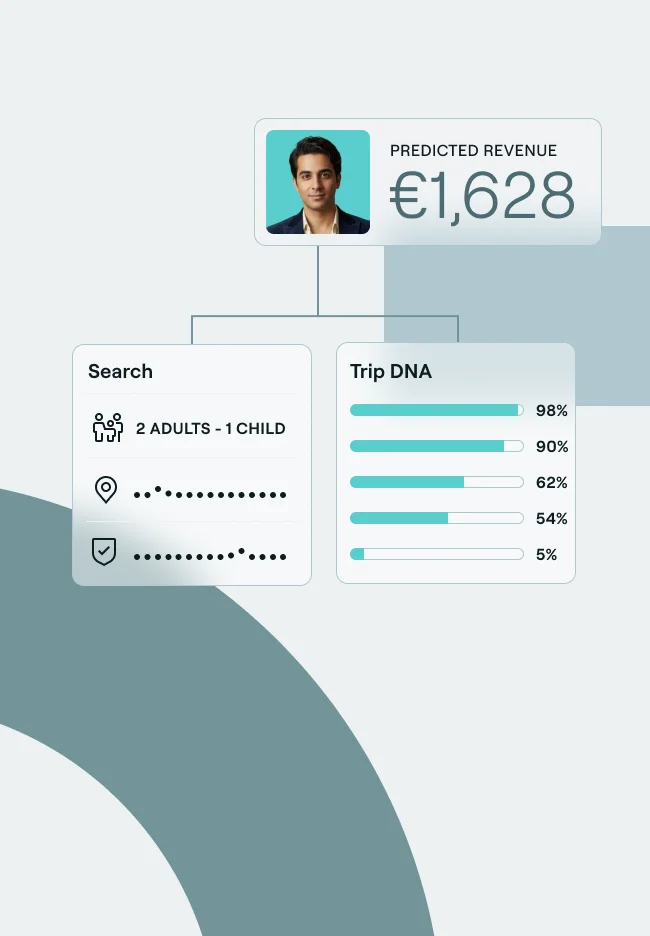 GIATA SmartseerReal-time AI Individualization for sales channels to maximize your conversions.
 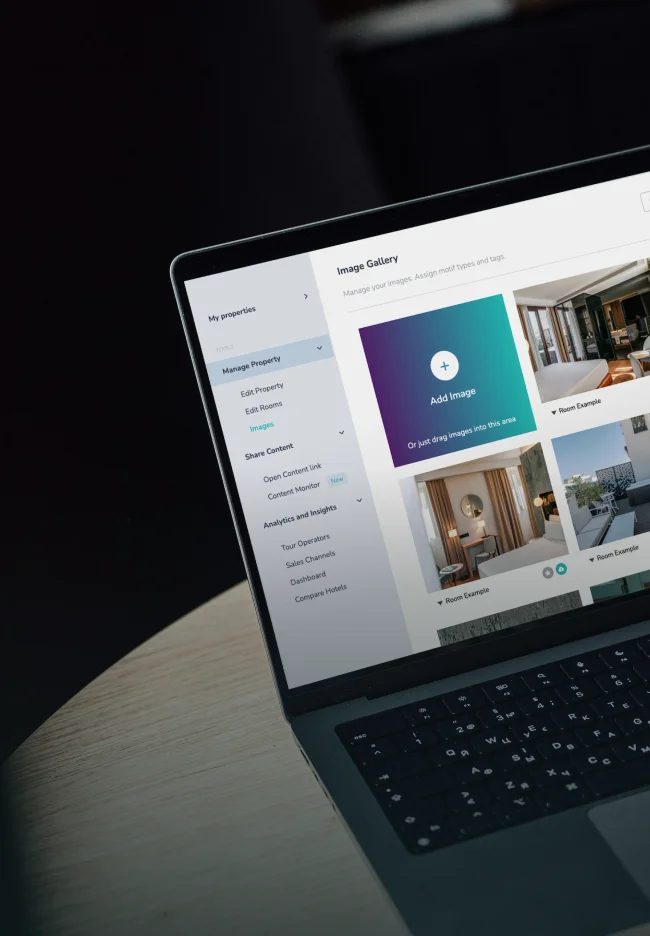 GIATA DriveCentralize, manage and share your hotel data from a single source of truth.
 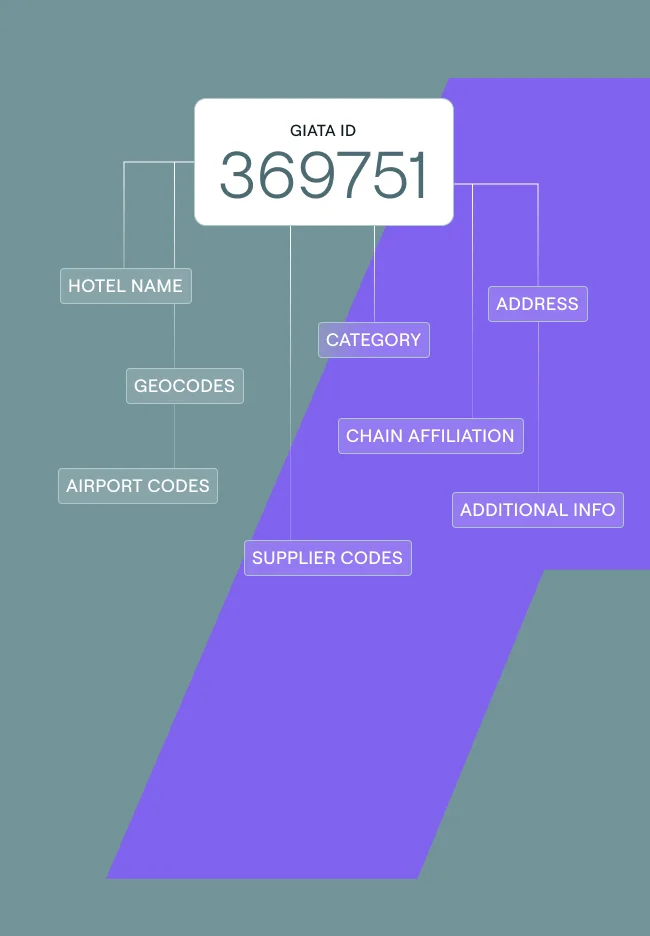 GIATA MulticodesSell with confidence using the world’s largest hotel mapping database.