


- Products
 SMARTSEER part of GIATATurn every traveller interaction into measurable revenue uplift.
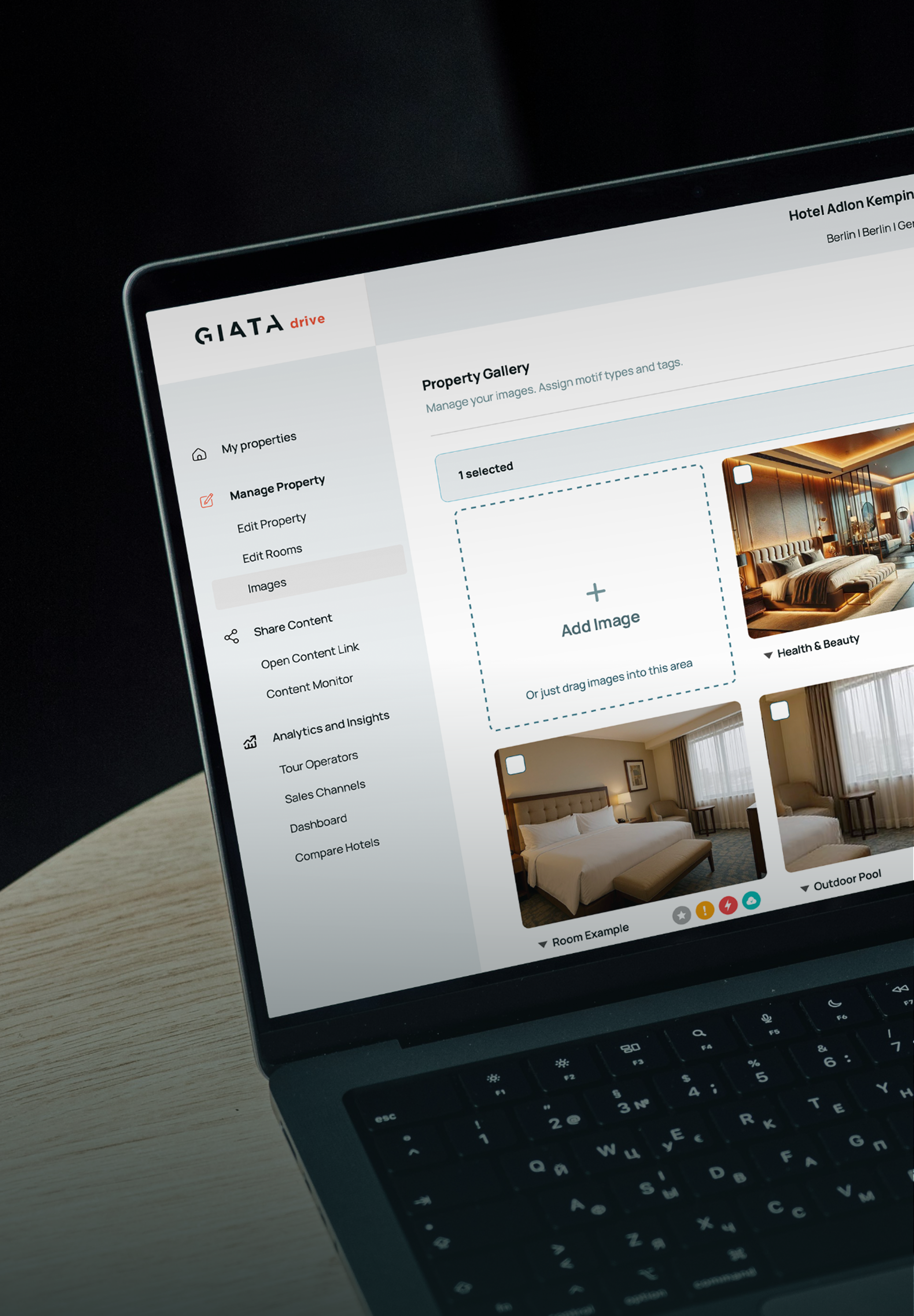 GIATA DriveCentralize, manage and share your hotel data from a single source of truth.
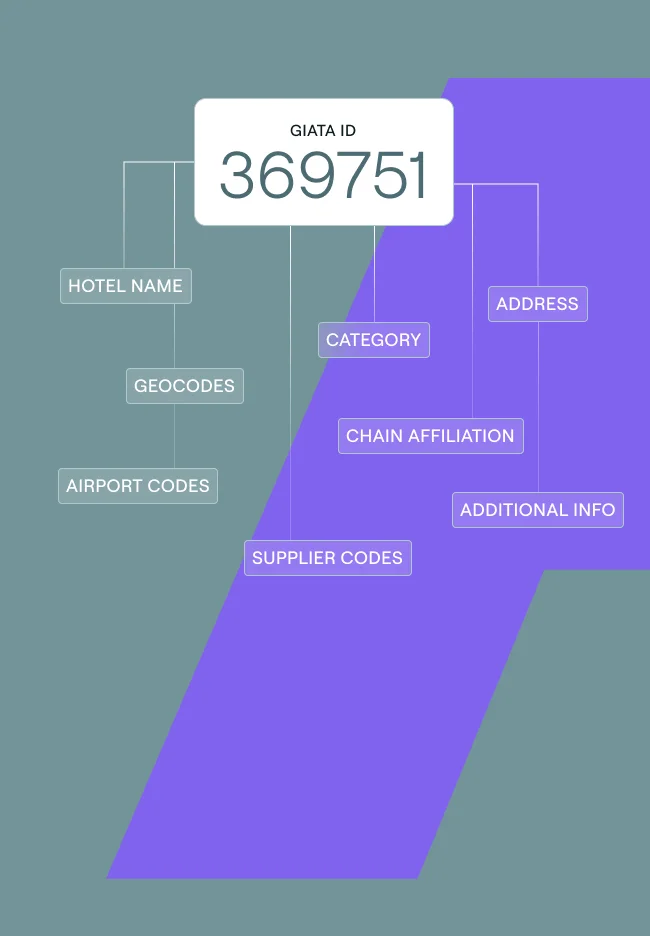 GIATA MulticodesSell with confidence using the world’s largest hotel mapping database.
- GIATA Room MappingClean up inconsistent room names to provide travelers with the best offer for every room type.
- GIATA Multilingual Hotel GuideUnlock new markets by offering localized hotel data in 25 languages.
- GIATA Hotel Guide (DACH)Access over 5 million localized package tours, aggregated from DACH tour operators.
- Solutions
- by Segment
- by Challenge
- Duplication booking errorsDuplicate listings and booking errors cost you time, money and trust
- Reliable travel data translationsYou can’t sell what travelers don’t understand
- Hotel data management and distributionTime spent manually updating hotel data is a lost opportunity to grow
- Decision intelligence in travelTurn user intent into profitable business decisions.
- Company
- Latest
- Help Center
- Login
Insights
The Smartest AI in Travel Still Has a Blind Spot
4. November 2026Category

As artificial intelligence transforms how travelers discover and book hotels, the travel industry faces a fundamental challenge: making fragmented information understandable, reliable and actionable for machines.
Imagine asking an AI travel assistant to find a family-friendly hotel in Mallorca. Not just any hotel. One with connecting rooms, a heated pool, a kids’ club and direct beach access. Ideally within a specific budget, available for the right dates and suitable for a family with two young children.
The AI assistant can understand the request. It can interpret preferences, compare options and explain why one property might be a better match than another.
What if the hotel’s room types are inconsistent across suppliers? What if the pool information is outdated? What if the same property appears under several different names? Or the AI simply cannot access the details that would make it a perfect recommendation?
The intelligence may be there. The information it depends on may not be. And that reveals one of the biggest challenges facing the next generation of travel technology.
Travel has an information problem, not just an AI opportunity
The travel industry is no stranger to technological transformation. Online booking platforms changed how travelers discover and purchase travel. Metasearch made prices easier to compare. Mobile technology brought the entire journey into our pockets.
Each wave changed how travel information was presented, accessed and distributed. Artificial intelligence is introducing another shift. But this time, it’s not simply about giving travelers a better interface.
It’s about changing how travel information is interpreted and used. For decades, digital travel experiences have largely been designed for people. Travelers could browse images, read descriptions, compare listings and make decisions even when the underlying information wasn’t perfectly organized.
AI introduces a different requirement. A machine needs to identify the property, understand its attributes, connect related information and assess whether that information is relevant to a particular request. And the travel industry’s data landscape makes this far from straightforward.
A single hotel can appear across hundreds of distribution channels, supplied by different partners, under different identifiers and with varying levels of detail. For a traveler browsing a website, these inconsistencies might be inconvenient. For an AI system trying to compare properties or support a booking decision, they can become significant obstacles.
The difference between having data and making it usable
To help hotels understand their current AI visibility, we’re pleased to highlight our partner Bluerails, a Berlin-based The travel industry has enormous amounts of data. Hotel descriptions, amenities, room categories, property images, location information, supplier codes, availability and pricing all contribute to the digital travel experience.
But having more information doesn’t automatically mean having better information. Consider three common challenges.
1. Identity: Does the system know which hotel it’s looking at?
The same property can be listed under different names and identifiers across multiple suppliers. Without reliable hotel mapping, systems may struggle to recognize that those listings refer to the same physical property.
This isn’t a new problem. Hotel mapping has been essential to travel distribution for years. But as AI-driven applications increasingly combine information from multiple sources, accurate property identification becomes even more important. Before an AI system can recommend the right hotel, it needs to know which hotel is which.
2. Understanding: Can the system interpret what the hotel actually offers?
A hotel might describe itself as family-friendly. But what does that mean? Does it offer connecting rooms, childcare, a kids’ club, and accessible facilities?
These details matter because travelers rarely search using only broad categories. Their preferences are specific, contextual and sometimes highly personal. Structured hotel data makes these attributes easier for digital systems to identify, compare and use.
A well-written description can inspire a traveler. But precise, machine-readable information helps technology understand whether the property meets their requirements. Both have a role. They solve different problems.
3. Reliability: Is the information still correct?
Hotels are constantly changing. Rooms are renovated. Restaurants open and close. Amenities are upgraded. Facilities become temporarily unavailable. Yet updates don’t always reach every distribution partner at the same time.
This creates conflicting versions of the same property across the travel ecosystem. An AI system may be able to process all of them, but processing conflicting information doesn’t automatically resolve which version is correct.
Reliable recommendations depend on information that is accurate, consistently maintained and updated across the channels where it is used. AI can interpret information at remarkable speed. But speed doesn’t make outdated information accurate.
From search results to decisions: Why precision matters more
Traditional online travel search typically presents options for travelers to evaluate. An AI-powered travel assistant can potentially take on more of that evaluation itself. Instead of displaying a long list of hotels, it might narrow the selection to three properties that best match a traveler’s needs.
That creates an important change in how information influences visibility. In a conventional search experience, a traveler might overlook an incomplete description, open another page or contact the hotel directly.
In an AI-assisted experience, missing or ambiguous information may affect whether a property can be confidently considered for a particular request. Imagine two hotels offering nearly identical family facilities.
One has clearly structured room information, verified amenities and consistently maintained property details. The other offers the same facilities, but the information is scattered across descriptions, outdated supplier feeds and inconsistent listings.
The second hotel isn’t necessarily less suitable. But it may be harder for an AI-powered system to evaluate accurately. This doesn’t mean structured data guarantees an AI recommendation. Ranking, availability, price, relevance and the design of the AI system all play important roles.
It does mean that data quality increasingly influences whether a property’s value can be understood in the first place.
Building a travel ecosystem that machines can understand
Preparing for AI-driven travel doesn’t mean replacing existing travel infrastructure. It means making that infrastructure more reliable, connected and accessible to emerging technologies.
For hotels, that starts with maintaining accurate property information and distributing updates consistently.
For travel platforms, it means resolving fragmented supplier data, identifying properties correctly and connecting hotel attributes across systems.
For technology providers, it means building applications that can work with reliable information rather than attempting to compensate for inconsistencies at every step.
And for the industry as a whole, it means recognizing that data quality is no longer only an operational concern. It’s becoming part of how travel businesses compete.
This is where GIATA has been working for decades. From hotel mapping and structured property information to centralized content management and distribution, GIATA helps travel businesses turn fragmented data into meaningful connections.
Solutions such as GIATA Multicodes and GIATA Drive address different parts of that challenge: establishing consistent hotel identities, managing accurate property information and making content available across connected sales channels.
As AI becomes more deeply embedded in travel discovery and decision-making, these established capabilities take on new relevance. Not because AI replaces the need for reliable data. But because it makes that need more visible.
The future of travel starts behind the scenes
AI will continue to change how travelers search, compare and book. Interfaces will evolve. Recommendations will become more contextual. New forms of automation will emerge.
But one principle remains. A system cannot reliably recommend what it cannot properly understand. And understanding depends on more than processing power or sophisticated algorithms. It depends on information that is accurate, structured, connected and maintained.
The travel industry has spent decades making it easier for people to find the right hotel. The next challenge is making sure machines can understand why it’s the right one. That’s where better data becomes better travel.
Book a demo and discover what better hotel data can make possible for your business.