

- Products
 SMARTSEER part of GIATAReal-time decisioning that aligns user needs with business goals.
 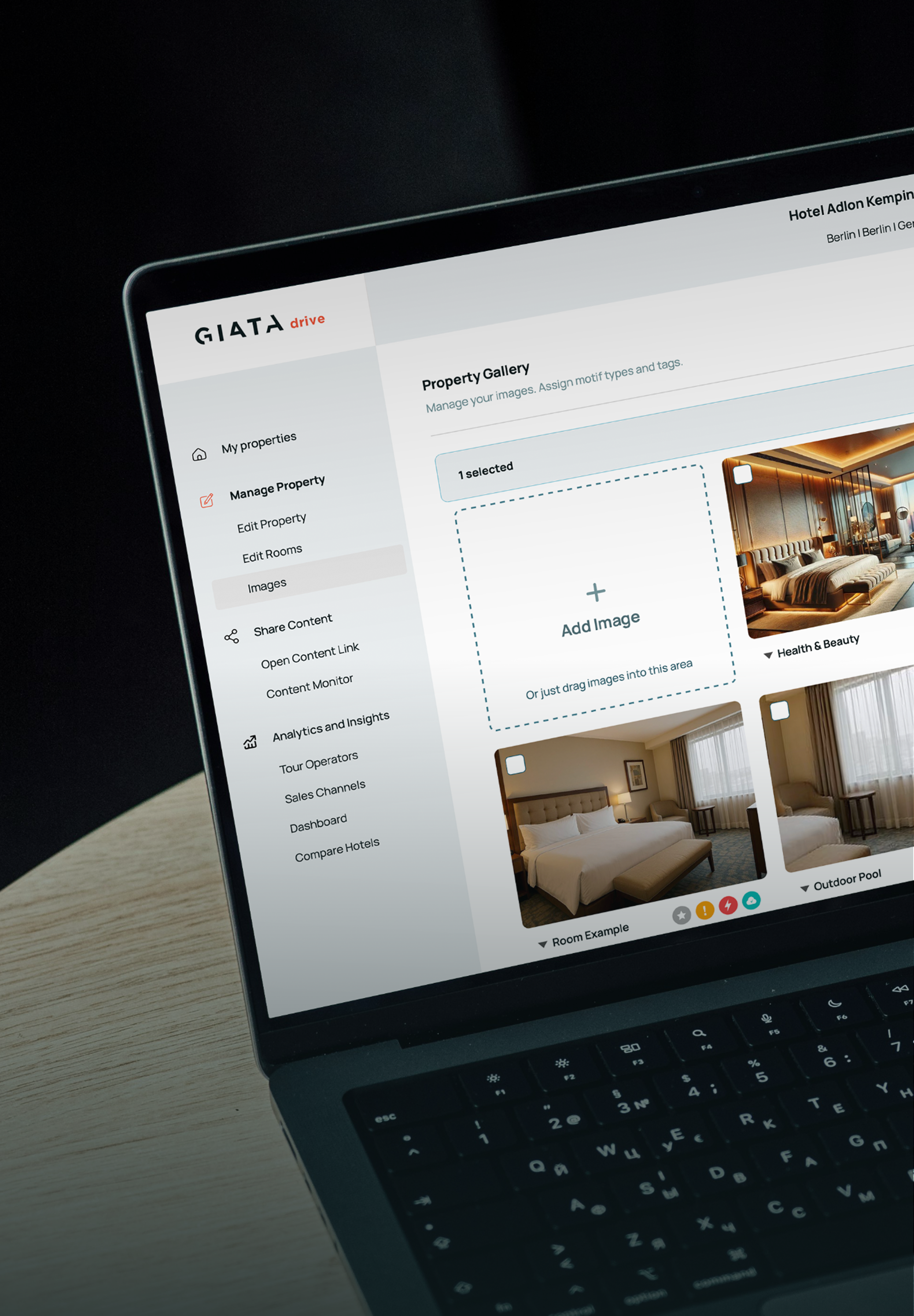 GIATA DriveCentralize, manage and share your hotel data from a single source of truth.
 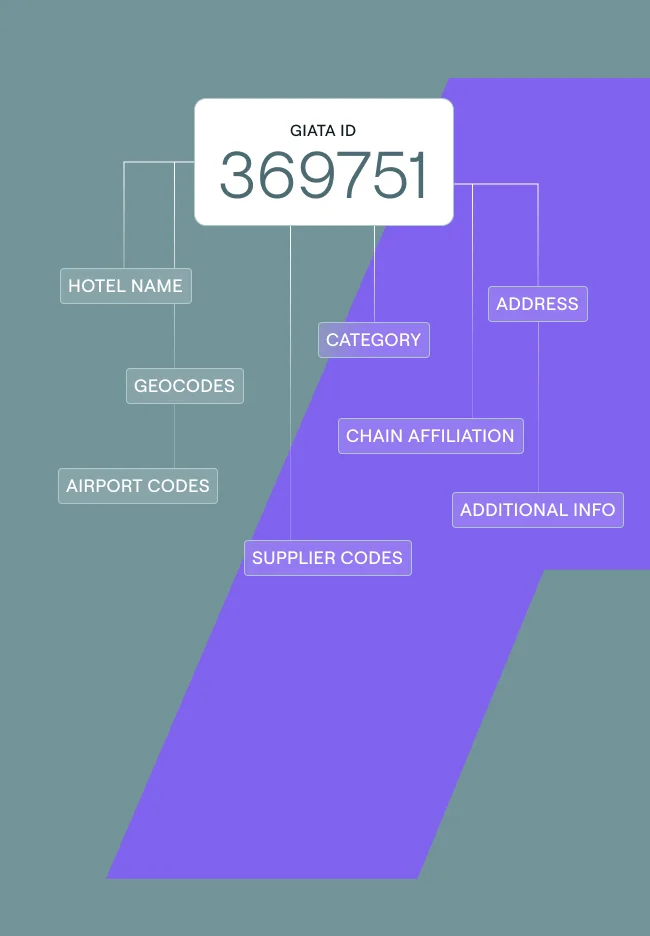 GIATA MulticodesSell with confidence using the world’s largest hotel mapping database.
- GIATA Room MappingClean up inconsistent room names to provide travelers with the best offer for every room type.
- GIATA Multilingual Hotel GuideUnlock new markets by offering localized hotel data in 25 languages.
- GIATA Hotel Guide (DACH)Access over 5 million localized package tours, aggregated from DACH tour operators.
- Solutions
- by Segment
- by Challenge
- Duplication booking errorsDuplicate listings and booking errors cost you time, money and trust
- Reliable travel data translationsYou can’t sell what travelers don’t understand
- Hotel data management and distributionTime spent manually updating hotel data is a lost opportunity to grow
- Individualization in travelPersonalization of travel experiences is no longer optional
- Company
- Latest
- Help Center
- Login
Insights
Your competitive edge isn’t more data. It’s better data.
27. April 2026Category

There’s a moment every OTA team knows well.
You’re sitting on more hotel content than ever hundreds of suppliers, thousands of properties, data flowing in from markets across the globe. It should feel like opportunity. Instead, it feels like noise.
Records that don’t match. Properties listed twice under different names. Descriptions that contradict each other depending on which channel you’re looking at. And somewhere in that mess, a traveler is trying to make a decision, and quietly losing confidence in your platform.
This is the paradox of scale in travel distribution. More data doesn’t automatically mean better performance. Often, it means more to manage, more that can go wrong, and more friction standing between a traveler and a booking.
The platforms that consistently outperform aren’t the ones sitting on the largest datasets. They’re the ones that have built a foundation solid enough to make their data actually usable.
When the foundation is right, everything moves faster
Clean, structured data changes how teams work in ways that are hard to overstate until you’ve experienced the alternative.
When your records are consistent and your hotel mapping is accurate, you stop spending half your day reconciling mismatched entries or second-guessing what your own system is telling you. Analysis gets faster. Decisions get clearer. And instead of reacting to problems after they’ve already cost you, you’re responding to demand as it happens.
That shift — from firefighting to forward motion — is what a solid data foundation actually buys you. Not just efficiency. Momentum.
The hidden cost of duplicate listings
Ask anyone managing hotel content at scale and they’ll tell you: duplicates are relentless.
The same property showing up twice under slightly different names. Fragmented reviews split across multiple listings. Pricing comparisons that don’t make sense because the platform isn’t sure it’s looking at the same hotel. And at the end of that chain — a traveler who feels something’s off, even if they can’t say exactly what, and decides not to book.
Duplicate listings don’t announce themselves. They erode trust quietly, distorting both the user experience and the performance metrics your teams rely on to make decisions.
Assigning one clear, verified identity to every property sounds like a technical fix. But what it actually does is give your platform a layer of integrity that travelers feel — even if they never know it’s there. A search result they can trust. A booking experience that doesn’t make them hesitate.
A single property might look like:
“Hilton Berlin”
“Berlin Hilton Hotel”
“Hilton Hotel Berlin Mitte”
To a system, those can appear as three different hotels. To a traveler, that’s confusion.
Discover how to eliminate duplicate listings →
One Update. Everywhere it needs to be.
There’s another cost to fragmented data that doesn’t always make it into the business case: the sheer repetition of it. When the same update has to be made across multiple disconnected systems, something will always slip. An amenity gets missed. A description goes stale. A photo that should have been replaced six months ago is still the first thing travelers see. Over time, those small inconsistencies add up, and they add up in the place that matters most, which is traveler trust.
A centralized approach removes that duplication of effort entirely. You update once. It flows everywhere. What travelers see is accurate, current, and consistent with what your brand actually promises.
In a market where the difference between a browse and a booking often comes down to confidence, that consistency isn’t a nice-to-have. It’s a conversion lever.
Explore how GIATA Drive centralize your hotel data and share with the world.→
Language is the friction nobody talks about
There’s one barrier to conversion that gets surprisingly little attention in travel tech: language.
Travelers can’t book what they don’t fully understand. When someone is comparing hotels in a language that isn’t their own, the cognitive load is real, and so is the drop-off. Small moments of confusion compound into hesitation, and hesitation into abandonment.
Distributing hotel content in more than 25 languages doesn’t just extend your geographic reach. It removes friction at exactly the moment when a traveler is closest to committing. When they can explore, compare, and evaluate options in their own language, the decision becomes easier. What was hesitation becomes confidence. And confidence becomes conversion.
The teams that benefit most are the ones you don’t always see
Better data infrastructure doesn’t just improve what travelers experience on the front end. It fundamentally changes what life looks like for the people building and maintaining your platform.
Fragmented, inconsistent data creates a constant background noise for development and support teams, manual corrections, integration issues, support tickets generated by problems that shouldn’t exist in the first place. It pulls talented people away from building things that matter and into cycles of reactive problem-solving.
Clean data reduces that burden significantly. Systems become more stable, integrations more predictable, and the issues that used to eat up entire sprints start to disappear. Your teams get to focus on what they’re actually there to do: build, optimize, and move the platform forward.
What changes when the foundation is right
Put it all together and what you get isn’t just operational efficiency, it’s a different kind of platform. One where travelers find what they’re looking for faster, with enough confidence to actually book. Where teams work from a shared, reliable source of truth. Where scaling up doesn’t mean scaling your problems alongside your inventory.
At GIATA, this is the work we’ve been doing since 1996, turning fragmented hotel data into structured, reliable foundations that travel businesses can build on. Not because clean data is an interesting problem to solve, but because it’s what separates platforms that perform from platforms that just exist.
Better data doesn’t just support your platform. It defines how far it can go.